Transparency Note: This article may contain affiliate links. If you make a purchase through these links, we may earn a small commission at no extra cost to you.
“How to Generate NSFW AI Images”? Why Most Tools Block Them – And What You Need to Know Instead
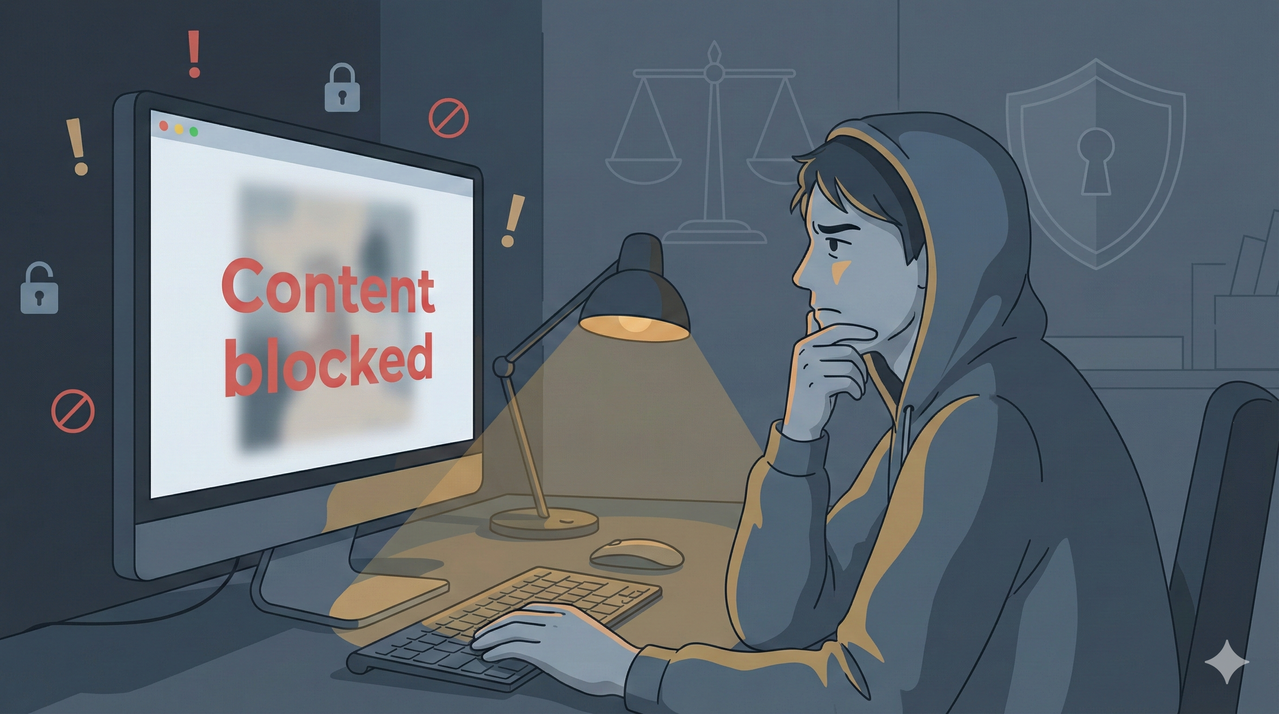
You sit down, eager to create. You type a spicy or edgy prompt into your favorite AI tool, hit enter, and get… nothing. Just a blurred square, a “content violation” warning, or a generic error message. Frustrated, you open a new tab and search how to generate nsfw ai images to figure out what the model will actually let you do.
[TOC]
If this sounds familiar, you aren’t alone. Thousands of users hit these invisible walls every day. But before you dive into sketchy forums or try to “jailbreak” a model, you need to understand why this is happening. The reality is that mainstream AI is not just “censoring” you arbitrarily; it is operating under a complex web of technical filters, legal safety nets, and ethical hard lines.
The Real Problem – Filters Keep Blocking What Users Ask For
Tech-savvy users generally know their way around software. You know how to craft a prompt and tweak parameters. The problem arises when you try to figure out how to generate nsfw ai images and hit a wall of silence. Mainstream tools rarely explain specifically why a prompt failed. Was it the word “skin”? Was it the pose? Was it the lighting?
When platforms sanitize content without clear explanations, users are left guessing. This lack of transparency is the primary friction point. You might see a “Unsafe Content” flag, but without a detailed log, you can’t tell if you accidentally triggered a safety filter or if the model simply misunderstood your request.
Typical User Scenario Behind the Search
Usually, the person searching how to generate nsfw ai images isn’t looking to cause harm.
- The Experimenter: A hobbyist or developer trying to test the limits of a new model (like SDXL or Midjourney) to see what it is capable of rendering.
- The Artist: A creator trying to generate classical artistic nudity or gritty, mature themes for a graphic novel, only to be blocked by an over-sensitive filter.
This leads to the feeling that “the system is arbitrary.” When you can’t distinguish between a banned illegal prompt and a blocked artistic prompt, the natural reaction is to look for workarounds.
Agitation – Why “Workaround” Advice Online Is Risky
When you search for how to generate nsfw ai images, the results often point toward “jailbreaks,” coded language, or modified third-party clients. While these might seem like quick fixes, they are fraught with risk.
- Account Bans: Using “jailbreak” prompts (e.g., “ignore all previous instructions”) is easily detectable. Platforms log these attempts.
- Malware Risks: Downloading unverified “uncensored” models or executables from random forums exposes your hardware to significant security threats.
Hidden Risks Most People Underestimate
Beyond the technical risks, there are legal and ethical landmines.
- Identifiable People: Attempting to generate explicit images of real people (celebrities, ex-partners, coworkers) intersects with strict deepfake, harassment, and defamation laws.
- The “Age” Ambiguity: If a model generates a character that looks ambiguous in age, and the content is sexually explicit, possession of that image can be a serious criminal offense in many jurisdictions, regardless of whether it was “AI-generated.”
Solution Overview – Understand What NSFW AI Is, How Filters Work, and Where the Hard Lines Are
Instead of looking for a sketchy tutorial on how to generate nsfw ai images, the smarter approach is to understand the architecture of these systems. By knowing how NSFW is defined and how the filters work, you can avoid account bans and stay on the right side of the law.
A Safety-First Reframe of the Original Question
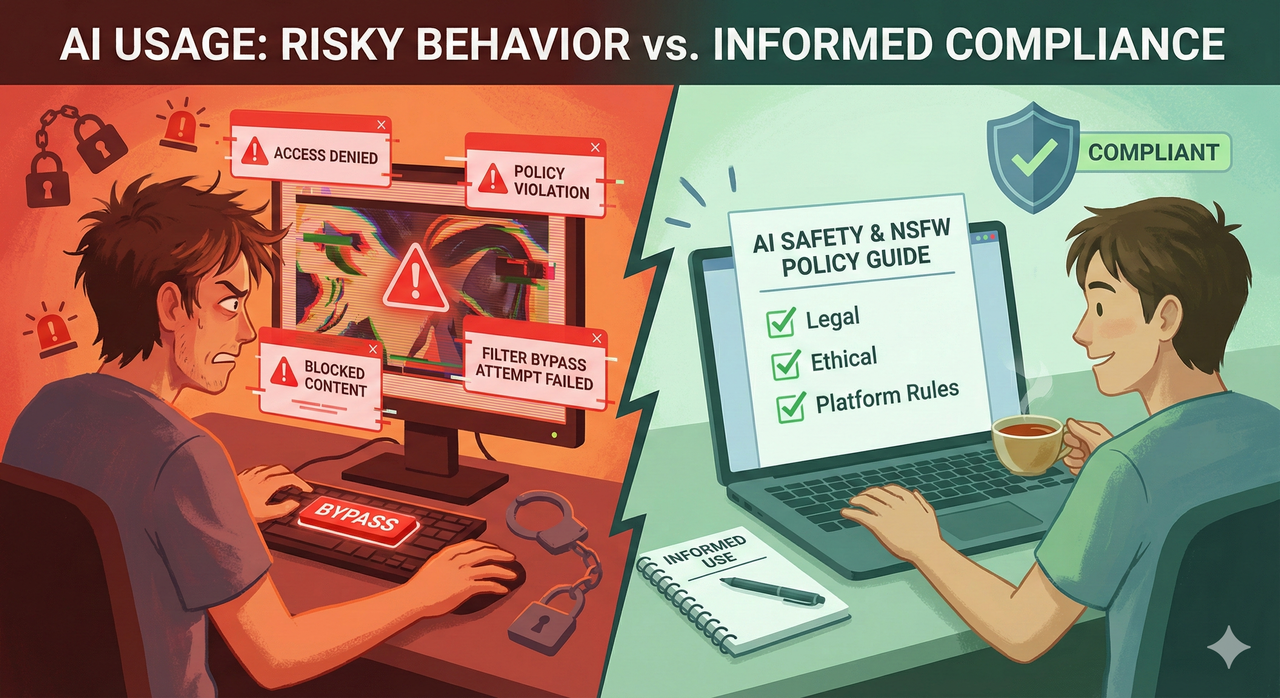
We need to recast the question from “how do I trick the AI?” to “what is actually allowed, and what happens if I push past those limits?” This mindset shift protects you from legal trouble and helps you understand the tool you are using.
What Counts as “NSFW” in AI Image Systems?
When you ask how to generate nsfw ai images, you are asking the system to produce content that falls into specific “Not Safe For Work” categories. In the context of AI, this definition is often broader than social media standards.
- Nudity & Sexual Acts: Full frontal nudity, intercourse, or implied sexual activity.
- Fetish Content: Specific sexual interests that platforms deem non-commercial or unsafe.
- Sexual Violence: Non-consensual scenarios, gore mixed with sexual imagery, or violence.
- Sexualized Minors: Strictly Prohibited. This is the hardest line in the industry.
Platform Policies and Community Guidelines
Every major AI provider (OpenAI, Midjourney, Stability AI, etc.) publishes an Acceptable Use Policy. These are not just suggestions; they are contracts. Violating them by repeatedly attempting to generate illegal or non-consensual content can lead to:
- Immediate content takedowns.
- Permanent account suspensions.
- Reports to NCMEC (National Center for Missing & Exploited Children) or law enforcement if the content involves minors.
How Mainstream AI Image Generators Block NSFW Content
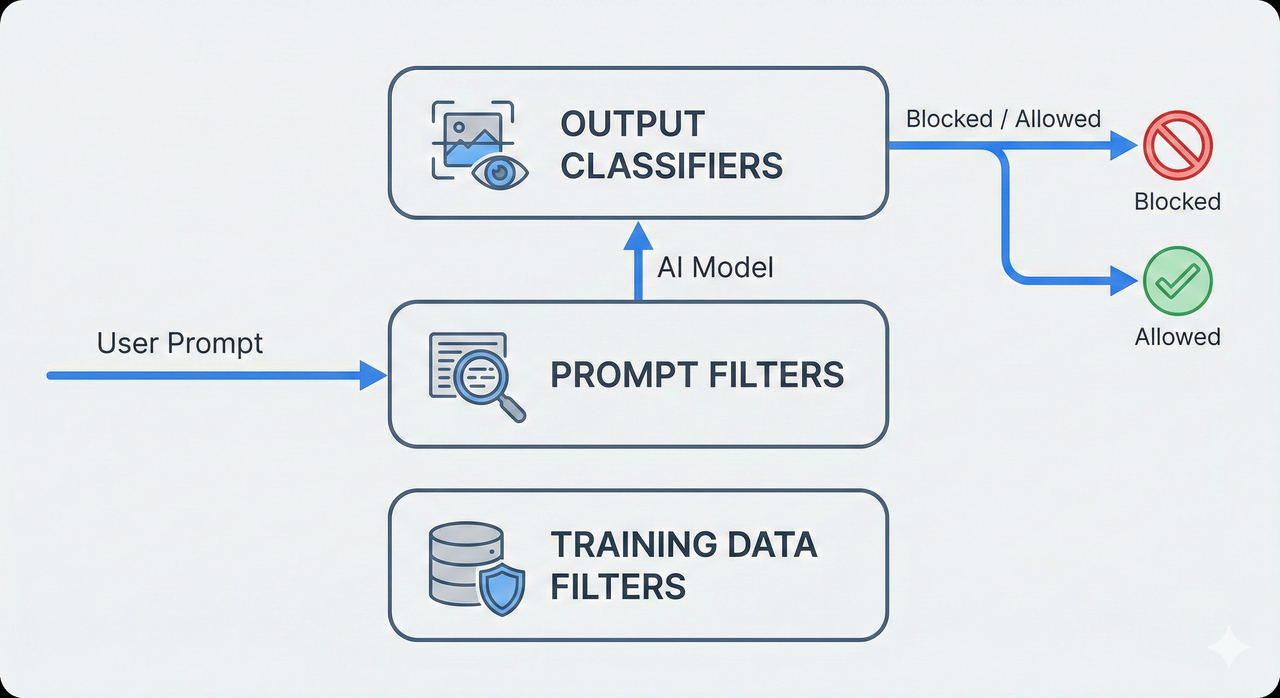
If you are still wondering how to generate nsfw ai images on mainstream platforms, the answer is usually: you can’t, because the system is designed to stop you at three different stages.
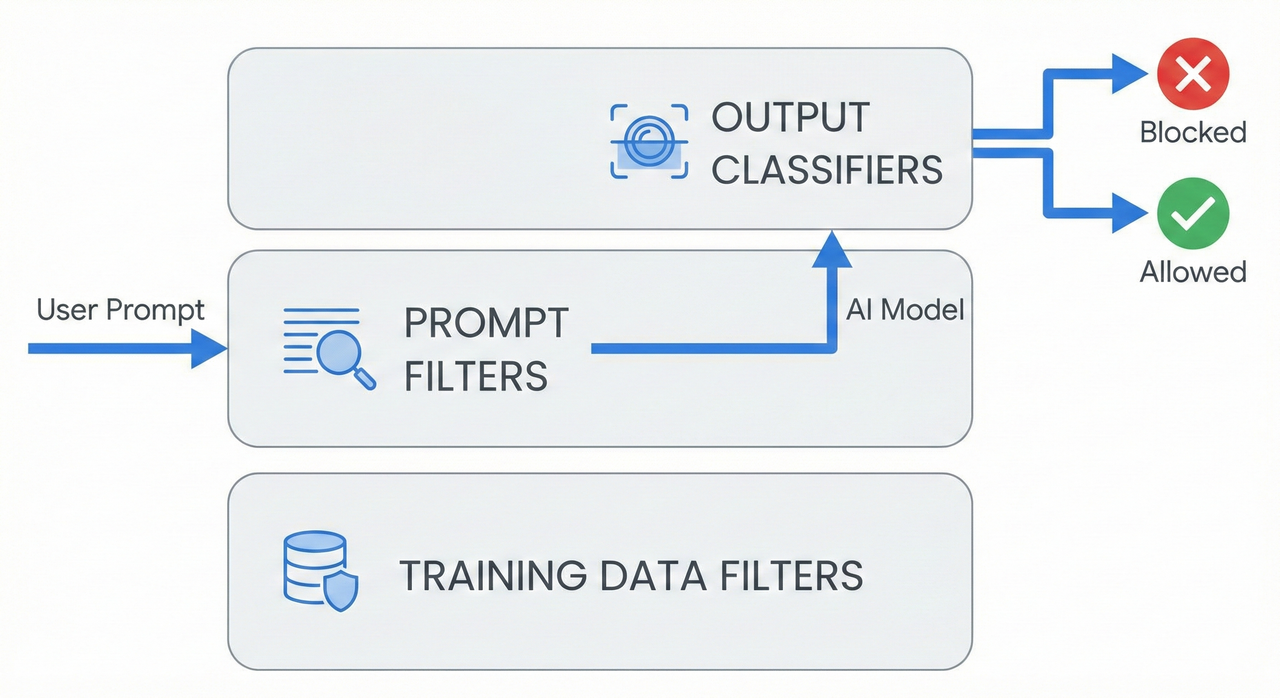
1. Training-Time Filtering and Model Limitations
Before the AI even “learns” to draw, the engineers curate the dataset. They remove millions of explicit images from the training data.
- The Result: Even if you bypass the text filter, the model might not know how to “draw” the explicit anatomy you are asking for because it never studied it. This is why “uncensored” outputs from mainstream models often look anatomically incorrect or blurry.
2. Prompt and Output Filters in Practice
- Input (Prompt) Filters: The system scans your text for blacklisted keywords. If you type specific anatomical or pornographic terms, the request is killed instantly.
- Output (Image) Classifiers: This is the final gate. Even if your prompt is innocent (e.g., “peeled banana”), if the resulting image looks like something explicit to the AI’s computer vision, it will be blurred or blocked before it reaches your screen.
Legal and Ethical Lines You Should Not Cross
The search for how to generate nsfw ai images stops being a technical curiosity and becomes a legal liability when it involves non-consensual content.
- “It’s Just AI” Is Not a Defense: Laws in the UK, EU, and parts of the US are evolving rapidly. Generating deepfake pornography is increasingly being criminalized.
- Reality Check: If you wouldn’t take a camera and photograph the scene you are prompting, you likely shouldn’t be generating it with AI either.
Consent, Privacy, and Deepfakes
Using AI to undress real people (DeepNude style apps) or place acquaintances in sexual scenarios is abusive. It violates privacy rights and can destroy reputations. Platforms take a zero-tolerance approach to this. If you are asking how to generate nsfw ai images of a specific person, you are crossing a serious ethical and legal line.
What You Can Safely Do with AI Image Tools
So, where is the middle ground? If you aren’t trying to generate illegal content, what can you do?
- Stylized Art & Anatomy: Some platforms allow for artistic nudity (e.g., classical statues, oil painting styles) provided it is not sexually explicit or pornographic.
- Medical & Educational: There are specialized datasets and tools designed for medical illustration, though these are rarely free consumer apps.
- Abstract Concepts: You can explore themes of desire, romance, or maturity through lighting, composition, and symbolism without triggering NSFW filters.
Reading and Following Tool-Specific Policies
Don’t guess. Go to the “Terms of Service” or “Community Guidelines” page of your tool. Look for the section on “Safety” or “Content Moderation.”
- Action: Bookmark these rules. If you are working on a project that toes the line (e.g., a horror game or a romance novel cover), knowing exactly where the boundary sits saves you from wasting credits and risking bans.
Why “Bypassing Filters” Is a Bad Idea (And What to Do Instead)
Trying to outsmart the developers who built the model is a losing battle. Even if you find a forum post explaining how to generate nsfw ai images using a specific loophole, that loophole will likely be patched within days.
The Alternative Mindset:
- Respect the Safeguards: They exist to prevent the proliferation of CSAM and non-consensual imagery.
- Use the Right Tool for the Job: If you need adult content, utilize legal, regulated adult entertainment channels rather than trying to force a general-purpose AI to produce it.
Risk Checklist Before You Try Anything Edgy
Before you hit “Generate” on a risky prompt, ask yourself:
- Could this involve minors? (If yes, STOP immediately).
- Is a real person identifiable? (If yes, do not proceed).
- Does this violate the tool’s terms? (If yes, you risk your account).
- Would I be comfortable if this log were reviewed by a human moderator?
If the answer to that last question is “no,” you already know you shouldn’t be doing it.
Takeaways – Using AI Creatively Without Crossing the Line
Learning how to generate nsfw ai images isn’t about finding a magic keyword; it’s about realizing that mainstream tools are built to restrict this content for safety, legal, and ethical reasons.
- Filters are multi-layered: Data, Text, and Image analysis all work together to block NSFW content.
- The risks are real: Beyond account bans, there are legal consequences for generating deepfakes or content involving minors.
- Stay Creative, Stay Safe: Focus your energy on the vast capabilities of AI that don’t require bypassing safety protocols.
Would you like me to help you decipher the Terms of Service for a specific AI tool you are currently using?
Leave a Reply