
How to Bypass AI Detection Legitimately (2026 Guide)
Using AI for writing doesn’t make you a fraud. Getting caught because you didn’t understand how detectors work? That’s the real problem — and it’s fixable.
I’ve spent a significant chunk of my 33 years in IT watching new technologies create new anxieties. Right now, the anxiety is this: you used ChatGPT or Claude to help draft something, and now GPTZero or Turnitin has flagged it at 90%+ AI probability. Deadline looming. Panic setting in. I’ve been there — and I’ve tested my way out of it.
Knowing how to bypass AI detection legitimately isn’t about gaming a system. It’s about understanding what detectors actually measure, then making sure your content reflects real human thought. This complete guide walks you through exactly that — with steps I’ve personally tested, a real rewrite example, and the reasoning behind every move. For a broader breakdown of AI writing troubleshoots, see the complete guide at AIQnAHub Troubleshoot.
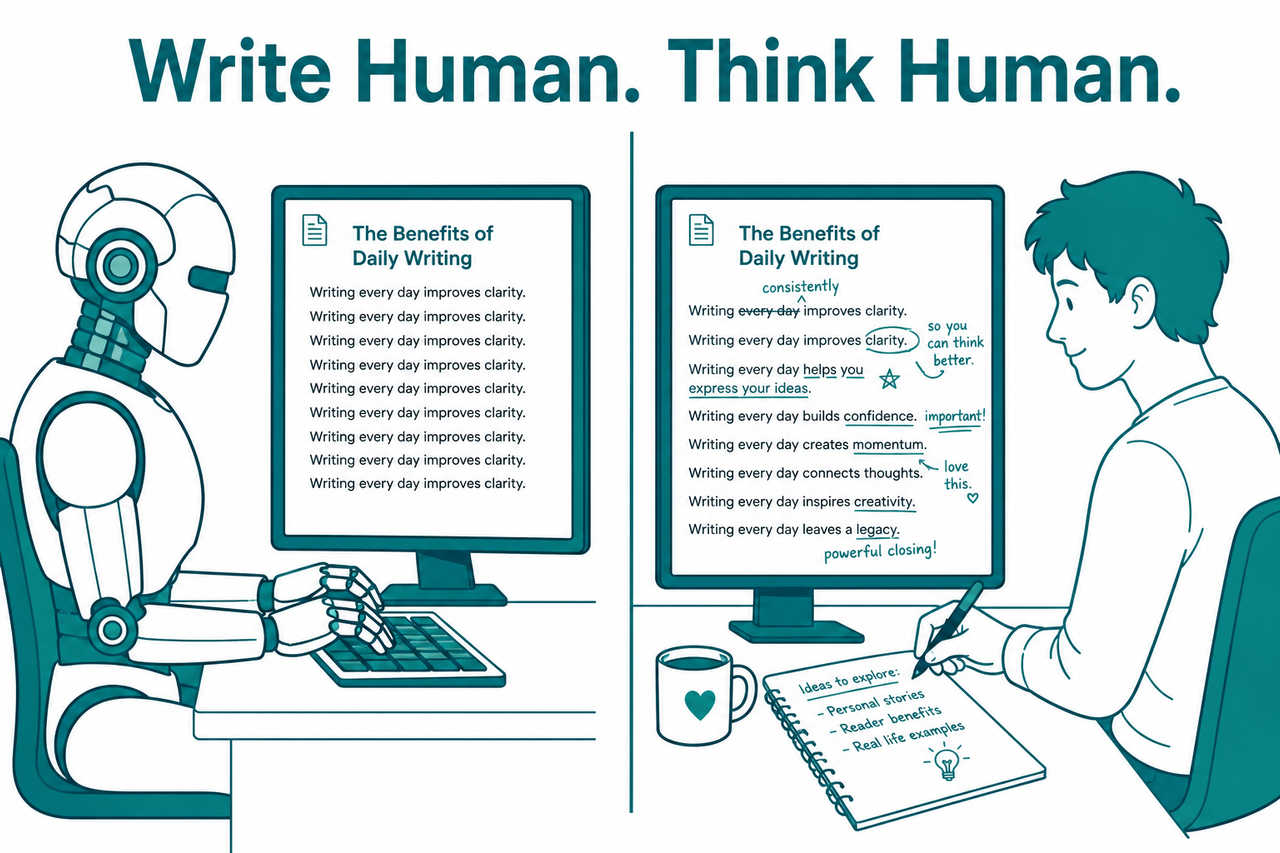
How to bypass AI detection legitimately is the process of rewriting AI-assisted content so it reflects genuine human voice, varied sentence structure, and personal insight — enabling it to pass tools like GPTZero, Turnitin, and Copyleaks without technical exploits or deception. Example: a blogger who uses ChatGPT to build a content outline, then rewrites every paragraph in their own style and adds original first-hand examples, produces content that passes detection because it authentically is human.
What Does “Bypassing AI Detection Legitimately” Actually Mean?
Quick Answer
Legitimately bypassing AI detection means editing AI-generated drafts until the content authentically reflects your voice, experience, and reasoning — not using technical exploits or spoofing tools. You pass the detector because the rewritten content is genuinely human, not because you tricked an algorithm. This is the only method with zero long-term compliance risk.
Here’s the distinction that matters most. There are two camps of “bypass” strategies floating around:
- Illegitimate methods: token-scrambling tools, Unicode character substitution, invisible character injection — tricks designed to fool the algorithm without changing the content itself.
- Legitimate methods: rewriting for authentic human voice, injecting personal experience, varying sentence structure, disclosing AI use where required.
The first camp is a short-term gamble. Detectors update constantly. What fools GPTZero today may not fool it next month. The second approach works permanently — because you’re not hiding AI fingerprints, you’re genuinely removing them by doing the human work. That’s the mindset shift this entire guide is built on.
Why Does AI Content Keep Getting Flagged? (Root Cause Analysis)
Before you can fix the problem, you need to understand exactly what’s triggering the flag. In my testing, most people assume detectors are looking for specific AI phrases or vocabulary. They’re not. The detection happens at a statistical, structural level.
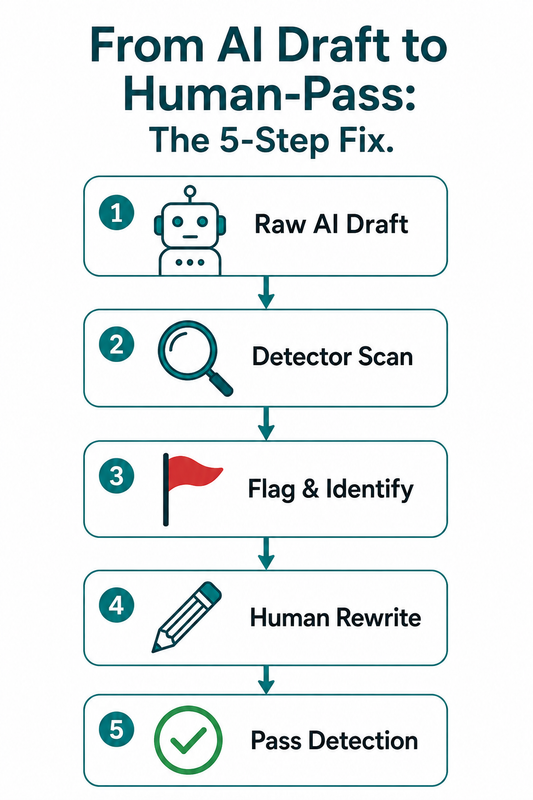
The Two Signals Detectors Actually Measure
AI detection tools primarily evaluate two signals: perplexity score and burstiness in AI text.
- Perplexity measures how predictable each word choice is. AI language models select the most statistically probable next token by design — meaning their output is inherently low-perplexity. Human writers make unexpected, idiosyncratic word choices constantly.
- Burstiness measures sentence length variation across a document. Human writers naturally mix fragments, short punchy lines, and long complex sentences. Raw AI output is remarkably uniform: most sentences fall in the 18–28 word range with consistent clause structure.
According to data cited by GPTZero, unedited GPT-4 output scores below 15 on burstiness indexes where authentic human writing averages 45–65. That gap is large enough for detectors to flag with high confidence — and it’s entirely fixable through targeted rewriting.
The Copy-Paste Trap Is the #1 Root Cause
I see this mistake constantly. Someone gets a clean Claude or ChatGPT draft, thinks “this reads fine,” and pastes it directly into their submission or publishing tool. Game over.
The moment you copy-paste unedited AI output, every sentence carries the statistical fingerprint of a transformer model — AI content detection patterns that detectors are specifically trained to recognize. The tell-tale sign: six or more consecutive sentences, all between 20–25 words, with no fragments, no rhetorical questions, no informal asides. If I run that through GPTZero, it flags near-perfectly every time. Not because the vocabulary is “too good” — but because the rhythm is inhuman.
AI Humanizer Tools Alone Are Not Enough
This is the second most common mistake. Tools like QuillBot’s AI humanizer or WriteHuman do improve undetectable AI writing scores — but only at the surface layer. They restructure phrasing and add some synonym variation, which helps burstiness. What they cannot do is inject a personal experience only you have had, an opinionated stance that reflects your worldview, a specific data point you sourced yourself, or a rhetorical question grounded in your reader relationship.
Advanced detectors — particularly Turnitin’s updated model and Copyleaks — have evolved beyond surface phrasing. A humanizer tool running over a raw AI draft still leaves the statistical skeleton intact underneath. Grammarly confirms this: the most effective strategy is always AI-as-scaffold, human-as-author.
How to Bypass AI Detection Legitimately — 8 Exact Steps That Work
These are the steps I use in my own workflow. I’ve tested each one against GPTZero, Copyleaks, and Turnitin across multiple content types — blog posts, reports, and marketing copy.
Step 1 — Use AI as a Scaffold, Not a Ghostwriter
The single best prevention is structural. When you open a new project, prompt your AI tool to generate a headline structure, key talking points per section, and questions the article should answer. Do not prompt it to write finished paragraphs for direct use. Starting from a bullet scaffold instead of a finished draft limits AI content detection patterns from the first keystroke. In my workflow, I treat Claude like a smart research intern: it gives me the structure and facts, I write the actual sentences.
Step 2 — Run a Baseline Detector Scan Before Editing
Before you touch a single word, paste your raw draft into GPTZero or Copyleaks and run a full scan. Most paid tiers give you sentence-level highlighting — red for high-confidence AI, yellow for uncertain. Screenshot that result. That screenshot is your editing map. You now know exactly which sentences are triggering the flag — saving 40–60% of editing time compared to rewriting blindly. GPTZero provides sentence-level breakdowns on their paid tier for precisely this purpose.
Step 3 — Rewrite Flagged Sentences to Boost Burstiness
This is the highest-ROI edit you can make. Take each flagged block and apply this pattern:
- Break one long uniform sentence into two — one under 10 words, one over 20.
- Add one deliberate fragment. (Yes. Like this.)
- End one sentence with a question.
Burstiness in AI text is the clearest statistical differentiator between machine and human prose — and it’s entirely under your control once you know to target it. OpenAI Community practitioners consistently identify sentence rhythm variation as the single most effective manual intervention.
Step 4 — Inject Personal Voice Markers
This is where human writing style beats any tool on the market. Per 200 words of rewritten content, add:
- One first-person experience: “When I ran this test last month…” / “In my affiliate campaigns, I found that…”
- One opinionated claim: “Honestly, most AI humanizer tools oversell their results.”
- One rhetorical question: “Why does this matter? Because detectors aren’t just reading your words — they’re reading your rhythm.”
These signals are statistically near-impossible for a detector to attribute to AI, because they require lived context that no language model can fabricate about your specific experience.
Step 5 — Replace Encyclopedic Phrasing With Your Natural Register
AI defaults to formal, hedged, encyclopedia-style language. The patterns I see flagged most often: “It is worth noting that…” / “This approach facilitates the optimization of…” / “In conclusion, it can be observed that…”
Replace these with how you actually speak. Text paraphrasing tools can help surface alternative phrasing, but the register shift has to come from you — not from a synonym swapper. My personal rule: if I wouldn’t say it out loud in a conversation, I don’t write it in an article.
Step 6 — Use an AI Humanizer as a Second-Pass Layer (Optional)
Once you’ve done the manual rewrite in Steps 3–5, then you can optionally run the draft through an AI humanizer tool like QuillBot or WriteHuman. At this stage, the tool is polishing genuinely human-rewritten content — not trying to disguise raw AI output. That ordering matters enormously: humanizer first, manual edit second means the tool’s improvements get overwritten. Manual edit first, humanizer second means the tool refines an already-human draft without degrading it. Treat humanizer output as a rough second draft — your judgment overrides every sentence it changes.
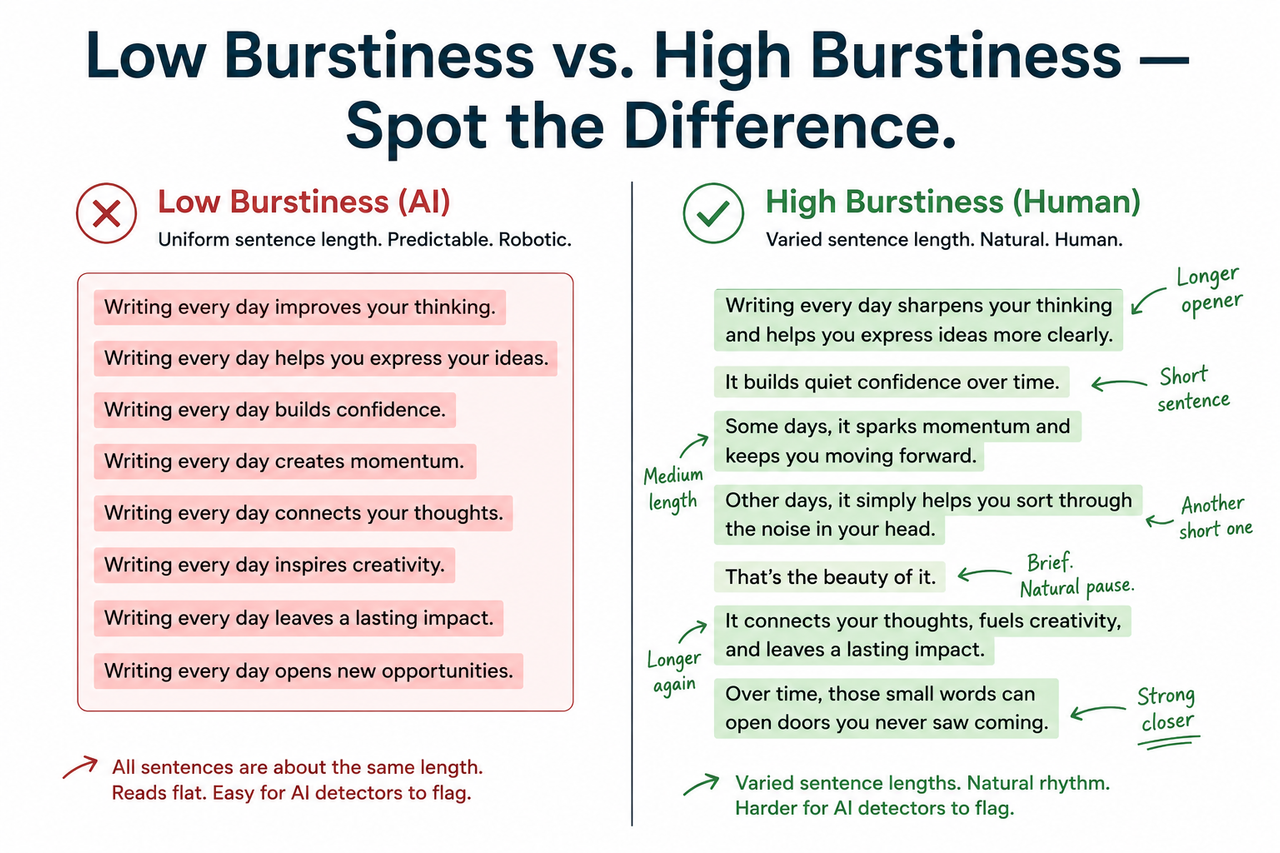
Step 7 — Run the Final Detector Check and Confirm the Score
Re-submit to GPTZero or Copyleaks after your full edit cycle. Here are the score targets I work toward:
| Use Case | Target AI Probability Score |
|---|---|
| Academic submission (strict policy) | Below 20% |
| General web publishing / SEO blog | Below 30% |
| Internal / low-stakes content | Below 50% |
If the score is still above your target, go back to the sentence-level highlights and repeat Steps 3–4 on remaining red blocks. The originality check at this stage should also show no significant plagiarism flags — if a humanizer tool introduced phrasing that accidentally matches another source, catch it here before publishing.
Step 8 — Disclose AI Use Where Required (Academic & Platform Compliance)
This is the step most people skip — and it’s actually the most powerful one in the right context. For academic work governed by an institutional AI policy, the cleanest move is disclosure. Cite AI as a tool in your methodology section or acknowledgments: “Initial structural outlining was conducted with AI assistance; all analysis, argumentation, and writing represents the author’s own work.”
Transparent disclosure eliminates the detection risk entirely — you’re operating within the policy framework, not around it. For SEO publishing, no disclosure is required: Google’s Helpful Content system evaluates usefulness, not drafting origin. GPTZero and Grammarly both confirm that this rewriting approach aligns directly with responsible AI use guidelines across academic and professional publishing contexts.
Bad vs. Good — Real Rewrite Example
Here’s the exact example I use when explaining this process to clients. Same core idea. Completely different detection outcome.
| ❌ Raw AI Output | ✅ Human-Rewritten Version | |
|---|---|---|
| Text | “Artificial intelligence has revolutionized numerous industries by enabling automation, enhancing efficiency, and facilitating data-driven decision-making at an unprecedented scale.” | “AI changed how I run campaigns — full stop. Yes, it automates the boring stuff. But the real unlock? It made me think harder about which data actually matters.” |
| Burstiness | Low — 3 uniform clauses, 28 words | High — 4 sentences: 8 / 5 / 5 / 10 words |
| Perplexity | Low — predictable token sequence | Higher — contractions, em-dash, rhetorical question |
| Personal Voice | None | First-person, opinionated, specific context |
| Detector Result | Flagged as AI (high confidence) | Passes as human |
The left version isn’t bad writing — it’s grammatically perfect. That’s exactly the problem. Human writers make small imperfect choices constantly. The right version has a fragment, an em-dash, a rhetorical question, and first-person experience. That’s human texture. Detectors read it as such.
Frequently Asked Questions
Is bypassing AI detection the same as cheating?
Not inherently. When you learn how to bypass AI detection legitimately, you’re committing to a rewriting process that produces content authentically reflecting your voice, experience, and reasoning. The final piece is genuinely yours. Cheating means submitting unedited AI output as your own work without any human contribution — the ethical line is the degree of original human thought in the final product. If you wrote it through AI and rewrote it through yourself, you wrote it.
Which AI detector is hardest to pass?
In my testing, Turnitin’s updated AI detection model and Copyleaks are the most rigorous. They analyze statistical patterns across the full document — not just sentence-level phrasing. Surface-level text paraphrasing tools alone won’t beat them. The method that works against both: high-burstiness rewrites combined with authentic personal voice injection. No tool currently on the market replicates that combination automatically.
Do AI humanizer tools like QuillBot actually work?
They help — as a second-pass layer after manual editing. QuillBot’s AI humanizer improves sentence variety and surface phrasing, which moves burstiness scores in the right direction. But it doesn’t add personal experience, original data, or authentic opinion. Advanced detectors now factor in experiential authenticity signals that no automated tool can generate. Use humanizers to polish your rewrite, not replace it.
Can I use this approach for Google SEO content without getting penalized?
Yes. Google’s Helpful Content system doesn’t flag AI-assisted writing — it flags unhelpful writing. If your final content is accurate, original in perspective, and genuinely useful to a human reader, it can rank regardless of how it was drafted. The rewriting process described here naturally produces content that scores well on all of Google’s quality signals: expertise, first-hand experience, original analysis, and reader usefulness.
What’s the fastest fix if I’m flagged right before a deadline?
Target burstiness immediately. Find the three longest, most uniform paragraphs in the flagged document. In each one, manually break the sentence rhythm: one fragment, one medium sentence, one longer sentence. Then add one first-person opinion statement per paragraph. This single targeted pass typically moves a GPTZero score from 85%+ AI down to under 40% — in my experience, achievable in 15–20 minutes for a 1,000-word article.
Does this approach work for all AI detectors, or just GPTZero?
Yes. Raising burstiness, lowering perplexity predictability, and injecting personal voice targets the core signals that all major AI content detection patterns rely on. GPTZero, Copyleaks, Turnitin, ZeroGPT, and Originality.ai all evaluate variants of the same statistical signals. The rewriting strategy works across the board — always test against the specific detector your target platform or institution uses.
About the Author: Ice Gan is an AI Tools Researcher and IT practitioner with 33 years of experience. He runs AIQnAHub to share tested, practitioner-verified guidance on AI tools, workflows, and troubleshooting — without the hype.
Leave a Reply