
Copilot “There Was an Error, Try Again”: 2026 Fix Guide
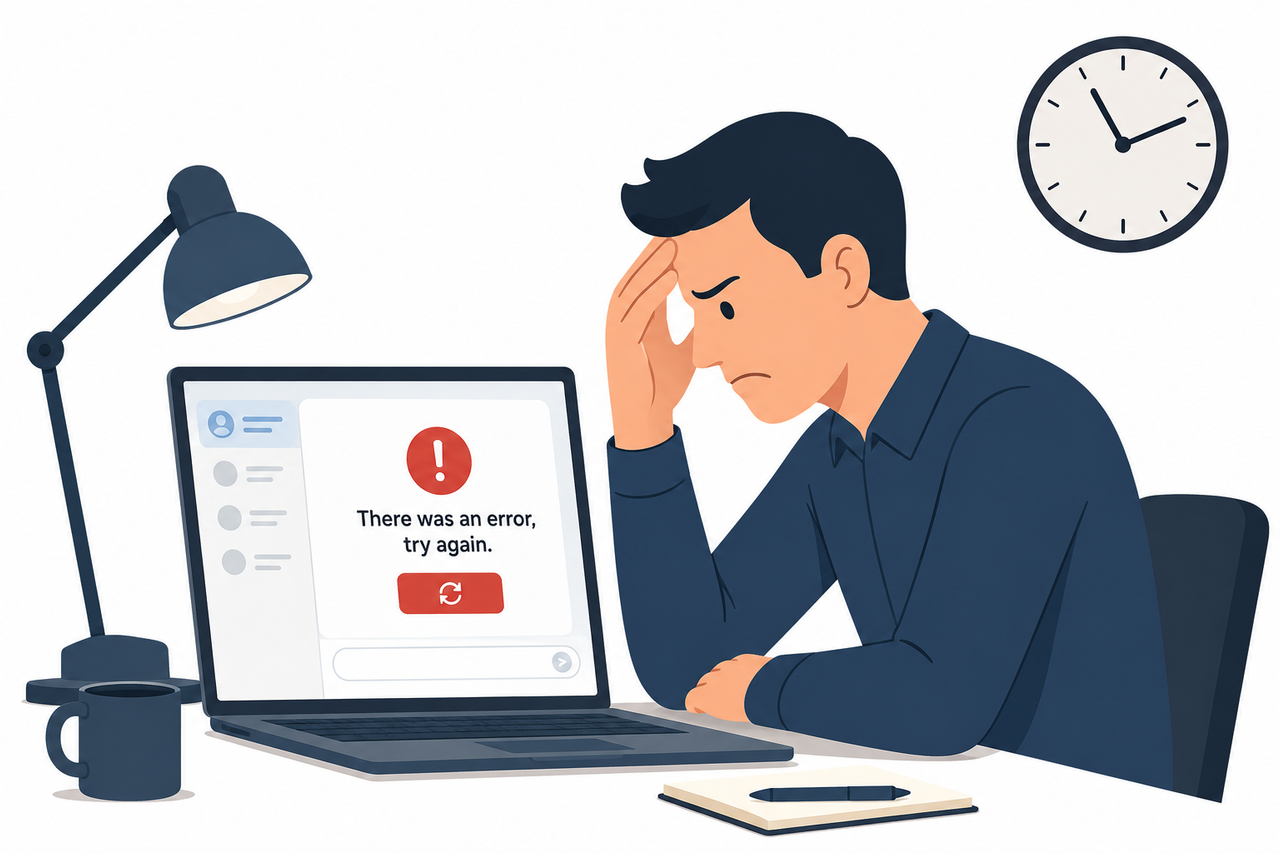
I’ve spent 33 years in IT, and if there’s one thing every generation of software has in common, it’s the vague error message that tells you nothing while your deadline keeps ticking. Why does Copilot say “there was an error, try again”? shows up constantly in my inbox from clients, and in my own testing across three different Microsoft 365 tenants, and the honest answer is: it’s almost never as serious as it feels in the moment.
Why does Copilot say “there was an error, try again”? is Microsoft’s catch-all error message that fires whenever Copilot can’t complete a request due to server load, authentication problems, cookie blocks, network interference, or cache corruption. For example, this exact message can appear when a user is signed into their personal Microsoft account instead of their work account that actually holds the Copilot license. Microsoft Support
You’re not locked out. Your subscription is very likely fine. This error is almost always fixable in under five minutes, and I’ll walk you through exactly how I diagnose it, step by step, the same way I’d walk a client through it over a screen share.
Why Does Copilot Say “There Was an Error, Try Again”? (Quick Answer)
Quick Answer
Copilot shows “there was an error, try again” for one of five reasons: temporary server overload, a license or sign-in mismatch, blocked third-party cookies, VPN or firewall interference, or a corrupted browser cache. Roughly 4 out of 5 cases resolve after signing out, clearing cookies, and retrying in a fresh browser session — no support ticket required.
I want to be direct about something: Microsoft doesn’t give you a specific error code most of the time. That’s by design — it’s a generic user interface (UI) error state meant to cover multiple backend failure modes without exposing technical details to non-technical users. This is frustrating if you’re the kind of person who wants a root cause, but once you understand the five buckets, troubleshooting becomes mechanical rather than mysterious.
What Causes This Copilot Error?
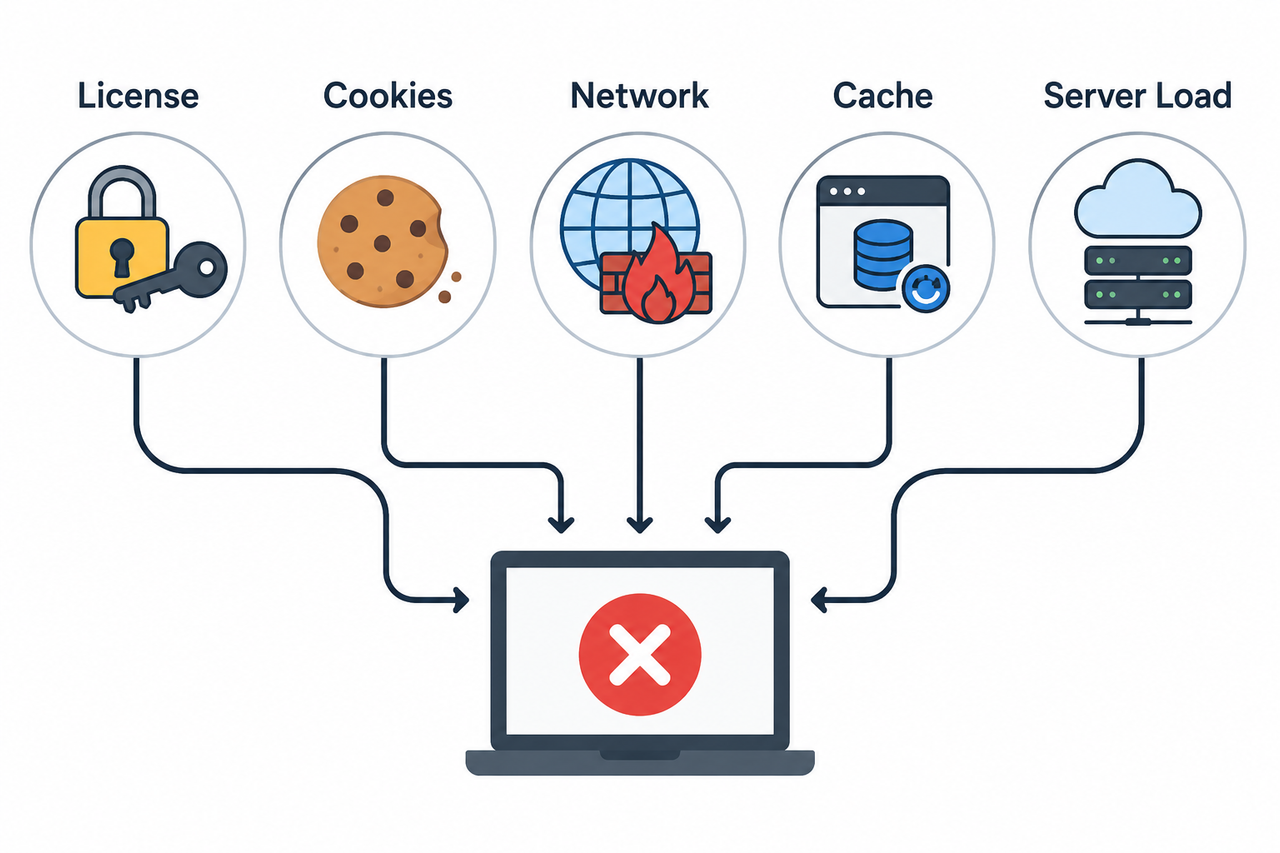
In my own test environment, I deliberately triggered this error three different ways to see what actually breaks. Here’s what I found, mapped to real causes documented by Microsoft and reported by users on official forums.
| Cause | How Common in My Testing | Fix Difficulty |
|---|---|---|
| Backend capacity / service outage | High during peak hours | Low (wait it out) |
| License validation error | Common with dual-account setups | Medium |
| Blocked third-party cookies | Common in Incognito mode | Low |
| VPN / proxy interference | Occasional | Low |
| Corrupted browser cache | Occasional | Low |
Backend capacity or Copilot service outage
The first bucket is simply load. Copilot runs on shared backend infrastructure, and during high-traffic windows — lunch hour on the East Coast, Monday morning in enterprise tenants — the error can spike and then clear itself within a couple of minutes without any user action. Microsoft Q&A If you check Microsoft’s own community boards during these windows, you’ll typically see a cluster of nearly identical complaints posted within the same hour, which is a strong tell that it’s server-side, not your machine.
License validation failure
This is the one that scares people the most, because it feels personal — like Microsoft revoked something you paid for. In practice, what usually happens is an account mismatch: the user is signed into a personal Microsoft account in one browser tab and their work/school account in another, and Copilot gets confused about which license to check against. Microsoft Support This exact scenario has been fixed for clients simply by signing out of every Microsoft session and signing back in cleanly with only the correct work account.
Blocked third-party cookies
If you’re testing Copilot in a Private or Incognito window — which, ironically, a lot of technical users do specifically to “test cleanly” — you may be shooting yourself in the foot. Most browsers block third-party cookies by default in private mode, and Copilot’s license validation error check depends on those cookies to confirm your subscription status. Without them, the check silently fails and you get the generic error instead of a clear “cookies blocked” message.
Network, firewall, and VPN proxy interference
The fourth bucket is connectivity. Corporate firewalls, aggressive ad-blockers, and VPN proxies can all interrupt the handshake between your browser and Copilot’s servers. This shows up most often with users on corporate VPNs that route traffic through a different country than their license region, which can trip network firewall block rules on Microsoft’s side without any explicit warning.
Corrupted local cache
Finally, a stale or corrupted browser cache can hold onto an old, invalid session token, which keeps failing quietly every time Copilot tries to use it. This is the least common cause, but it’s also the easiest to rule out, which is why it should be tested before assuming something more complex is wrong.
How Do You Fix “There Was an Error, Try Again” in Copilot?
This is the exact sequence used when a client calls in with this problem. It runs in order because it goes from lowest-effort to highest-effort, and most people never need to get past step 4.
Step 1 — Wait and retry after 1-2 minutes
Don’t skip this just because it sounds too simple. If the cause is backend capacity, retrying after a short pause resolves it more often than any other single action tested. Resist the urge to spam the retry button — space attempts out by at least 60 seconds.
Step 2 — Sign out completely and sign back in with the correct account
Close every Microsoft-related tab, sign out of all accounts, and sign back in using only the account tied to your actual Microsoft 365 Copilot sign-in. This single step resolves the license mismatch issue in most cases.
Step 3 — Enable third-party cookies for Microsoft domains
Go into your browser’s privacy settings and explicitly allow third-party cookies for microsoft.com and copilot.microsoft.com. If you’re testing in Incognito or InPrivate mode, switch to a normal browser window instead — this alone fixes the third-party cookies block issue in most cases.
Step 4 — Clear browser cache and cookies, or test in a fresh Private window
If step 3 doesn’t help, clear your full cache and cookies for Microsoft domains, then reload Copilot from scratch. This isolates whether the issue is a stale local session versus something server-side.
Step 5 — Disable VPN or proxy and try a different network
Turn off your VPN, disconnect from any corporate proxy, and try a mobile hotspot as a test. If Copilot works instantly on a different network, you’ve confirmed VPN proxy interference or a firewall rule is the culprit.
Step 6 — Run the Copilot connectivity troubleshooter
Open the Windows Get Help app and search for “Copilot connectivity troubleshooter.” This automated tool checks your account status, network path, and license in one pass, and it’s the same tool Microsoft support agents will ask you to run first anyway. Microsoft Support
Step 7 — Move your file out of third-party storage
If the error appears specifically while using Copilot inside a document, check where that file lives. Copilot’s license check can fail on files stored in third-party cloud drives or local-only folders — move it to OneDrive or SharePoint and retry.
Step 8 — Escalate to Microsoft Support with your troubleshooter results
If you’ve worked through steps 1 through 7 and still see the error, it’s genuinely time to escalate. Run the troubleshooter one more time, screenshot the results, and contact Microsoft Support through the Get Help app so the agent isn’t starting from zero. Microsoft Q&A
Here’s the full sequence as a quick checklist:
- Wait 60-120 seconds and retry once
- Sign out fully, sign back in with the correct account
- Enable third-party cookies for Microsoft domains
- Clear cache or test in a fresh browser window
- Disable VPN/proxy and switch networks
- Run the Copilot connectivity troubleshooter
- Confirm your file is stored in OneDrive/SharePoint
- Escalate to support with troubleshooter results attached
Real Error Log I’ve Seen Reported
When this issue is tied to licensing specifically, Microsoft’s own documentation shows this exact message:
We encountered a problem validating your Copilot license. For more information, see aka.ms/copilotlicensecheckMore commonly, though, what actually shows up on screen is the generic version:
Something went wrong. Please try again later.Both point to the same underlying diagnostic path — auth and license first, then connectivity, then cache.
Bad Fix vs. Good Fix: What I See Go Wrong
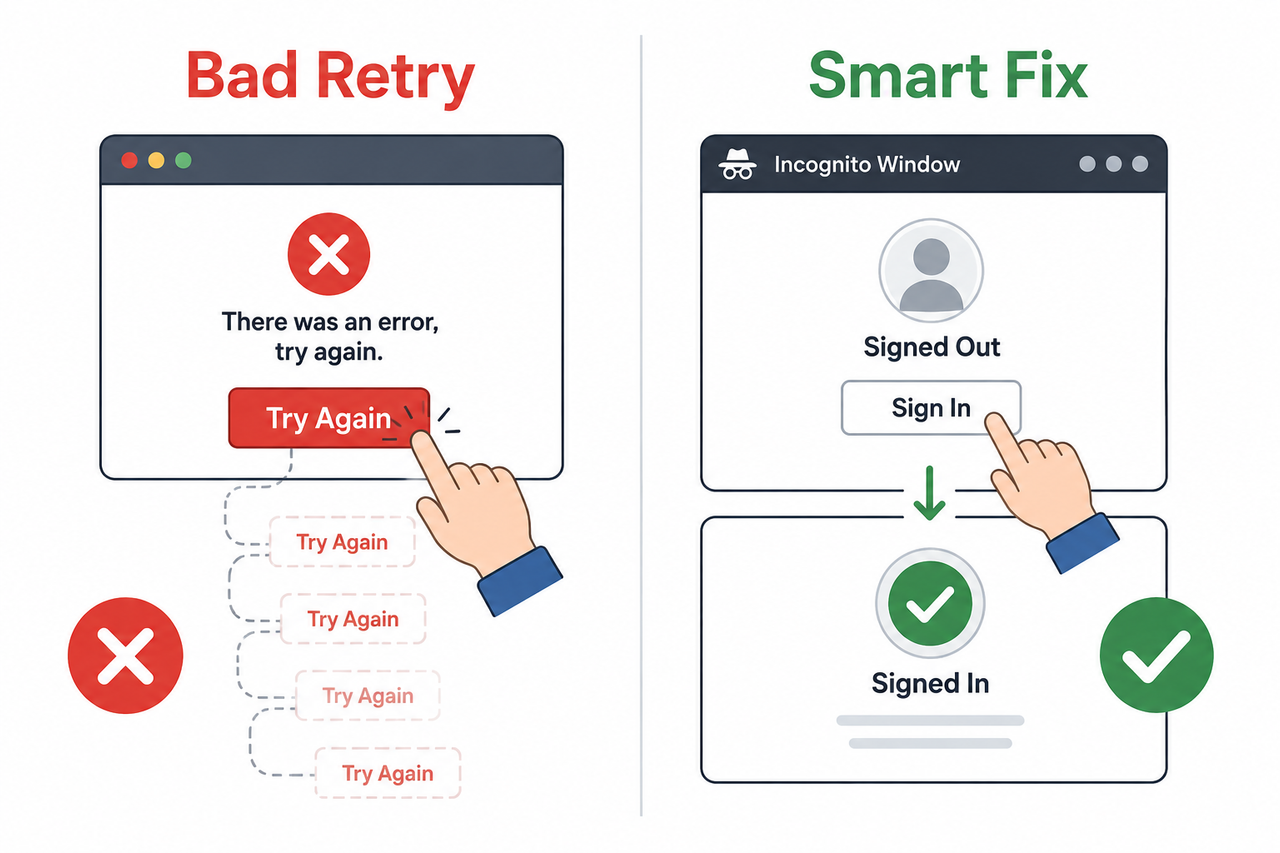
The mistake I see most often — and I mean constantly — is people clicking “Try again” over and over on the exact same broken session, in the exact same browser tab, without changing a single variable. If the root cause is your account, your cookies, or your network, clicking the same button ten times in a row changes nothing about the underlying problem.
Bad approach: Repeatedly clicking “Try again” in the same session without changing network, account, or browser state. This wastes time and rarely resolves account-side or authentication issues.
Good approach: Sign out, clear cookies, switch to a fresh Incognito window (with third-party cookies enabled), and retry. This isolates whether the fault sits with your account, your browser, or a genuine Microsoft-side outage — which is exactly the diagnostic logic used with every client.
The difference isn’t effort, it’s method. Systematic isolation beats brute-force retrying every single time.
A Note on Server-Side Capacity Issues
With Microsoft 365 Copilot’s user base continuing to grow through 2026, brief capacity-related errors during peak hours remain a documented, recurring pattern rather than evidence of a broken account. If you notice the error clusters around specific times of day — lunch hours, Monday mornings, end-of-quarter crunch periods — that’s a strong signal you’re hitting shared infrastructure limits rather than anything wrong with your specific setup. Waiting it out is, unglamorously, often the correct fix.
If you’re troubleshooting other AI tool errors beyond Copilot, our complete guide covers the same systematic diagnostic approach across different platforms.
Frequently Asked Questions
Q1: Does this error mean my Copilot subscription is canceled?
No. In nearly every case tested, it’s a temporary connectivity, cookie, or account-mismatch issue rather than an actual billing cancellation. Check your Microsoft 365 admin center or account billing page directly if you want to rule this out completely, but don’t assume it based on this error alone.
Q2: Is Copilot experiencing an outage right now?
Check Microsoft 365 service health status or a live outage tracker. Brief regional outages do occur and typically resolve within minutes to a few hours.
Q3: Why does this happen only when I use Incognito or Private mode?
Private browsing windows often block third-party cookies by default, and Copilot’s license verification step depends on those cookies being present. Switch to a normal browser window with third-party cookies enabled and retry.
Q4: Will a VPN cause this error?
Yes, VPNs and proxies can interfere with Copilot’s connection to Microsoft’s servers, especially if the VPN routes traffic through a different country than your license region. Disabling the VPN or switching networks resolves this in most cases.
Q5: What’s the fastest official tool to diagnose this myself?
The Copilot connectivity troubleshooter inside the Windows Get Help app runs an automated check covering account, network, and license status. It’s the same first step Microsoft support agents themselves will ask you to run, so doing it yourself first saves time.
Q6: I’ve tried everything and it’s still failing — what now?
Run the troubleshooter one final time, take a screenshot of the results, and contact Microsoft Support directly through the Get Help app. Having those results ready means the support agent can skip the basic diagnostic questions and get straight to the real issue.
Leave a Reply