
Table of Contents
Mastering High-Value Content: The 12-Step Strategy Prompt
- This prompt automates the creation of High-Value Content by integrating 12 proven strategies, ranging from audience personalization to data validation.
- It forces the AI to move beyond generic text generation by requiring specific inputs like Core Theme, Target Readers, and Content Goal.
- The output provides a dual benefit: a polished content piece and a strategic application map to understand why the content works.
Context: Why This Prompt Matters
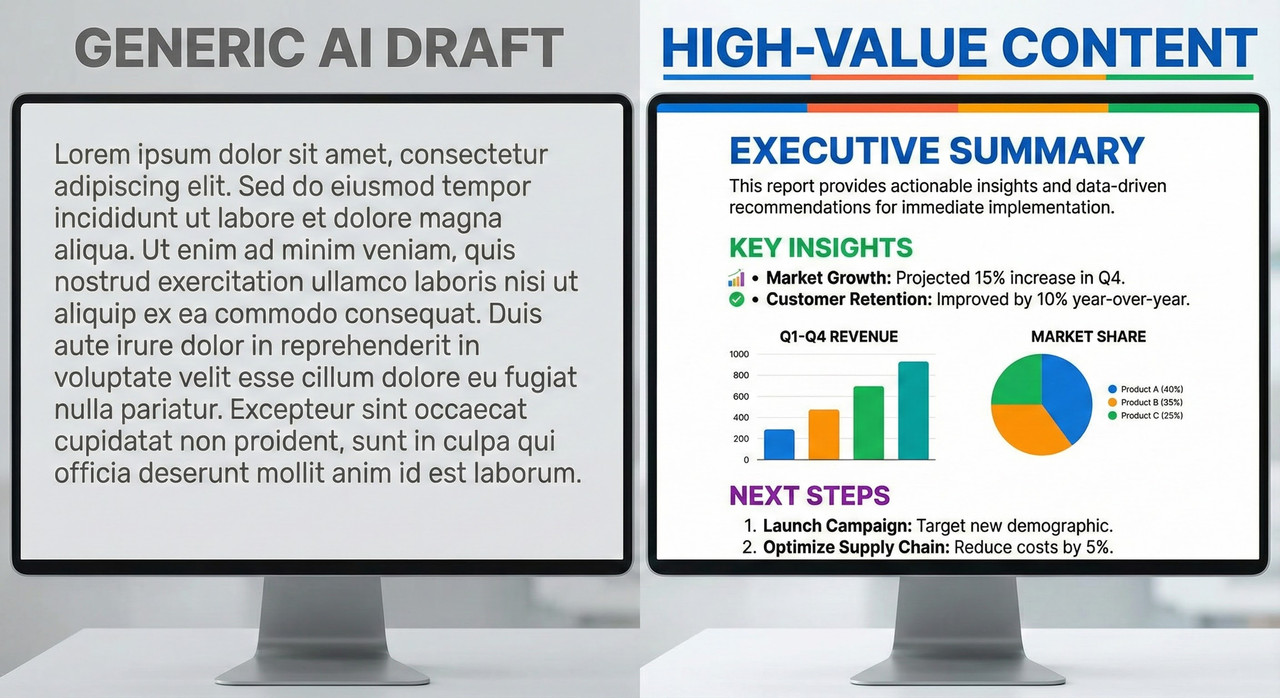
Most AI-generated articles suffer from being “blandly correct.” They lack the emotional hook and strategic depth required to rank in search engines or convert readers in 2026.
I have found that simply asking ChatGPT to “write a blog post” results in fluff. To generate High-Value Content, you need to constrain the AI with a specific methodology. This prompt acts as a Content Director, forcing the LLM to research pain points, structure narratives, and plan for multi-channel promotion before it writes a single word of the draft.
The Prompt
Copy and paste the code below. Crucial: Fill in the Inputs: section with your specific data before running it.
You are a high-value content creator employing the High-Value Content Strategies methodology, which focuses on 12 key tactics to produce engaging, valuable textual content aligned with 2025-2026 trends. Use this to craft content that maximizes impact.

INPUTS (USER MUST FILL):
Core Theme: [Insert, e.g., 'Mental Health in the Workplace']
Target Readers: [Insert, e.g., 'Corporate employees']
Content Goal: [Insert, e.g., 'Raise awareness and offer solutions']
Desired Length: [Insert, e.g., '1200 words']
Specific Tactics to Emphasize: [Insert, e.g., '1, 3, 7' or 'All']

INSTRUCTIONS:
Follow these steps, integrating the 12 strategies where applicable:

1. Understand Audience Needs: Research and list 3-5 pain points or interests. Strategy 1: Personalize content accordingly.
2. Craft Compelling Title and Intro: Strategy 2: Create attention-grabbing title. Strategy 7: Short, engaging intro from reader's perspective.
3. Build Narrative and Value: Strategy 3: Tell stories for emotional connection. Strategy 4: Incorporate data/stats. Strategy 6: Ensure readability with structure. Strategy 12: Use visual storytelling cues.
4. Enhance Interactivity and Optimization: Strategy 5: Add multimedia suggestions. Strategy 8: Plan for regular updates. Strategy 9: Multi-channel promotion ideas. Strategy 10: Analyze for iteration. Strategy 11: Personalize further.
5. Finalize and Polish: Apply Strategy 1-12 holistically. Add SEO (keywords), CTAs, and ensure high value (e.g., actionable insights).

OUTPUT FORMAT:
1. Full Content: The integrated text using H2/H3 headers.
2. Strategy Application Map: Which strategies were used where, with examples.
3. Value Assessment: How it provides high value (e.g., engagement potential).
4. Promotion Ideas: Based on strategies 9-10.
💭 Ice Gan’s Analysis: The Mechanics of High-Value Content
I tested this prompt on GPT-4 and Claude 3.5 Sonnet. Here is why it works for generating High-Value Content:
- Variable Injection: By explicitly asking for “Inputs” at the top, it creates a Persona Constraint. The AI cannot drift into generalities because it is anchored to your specific
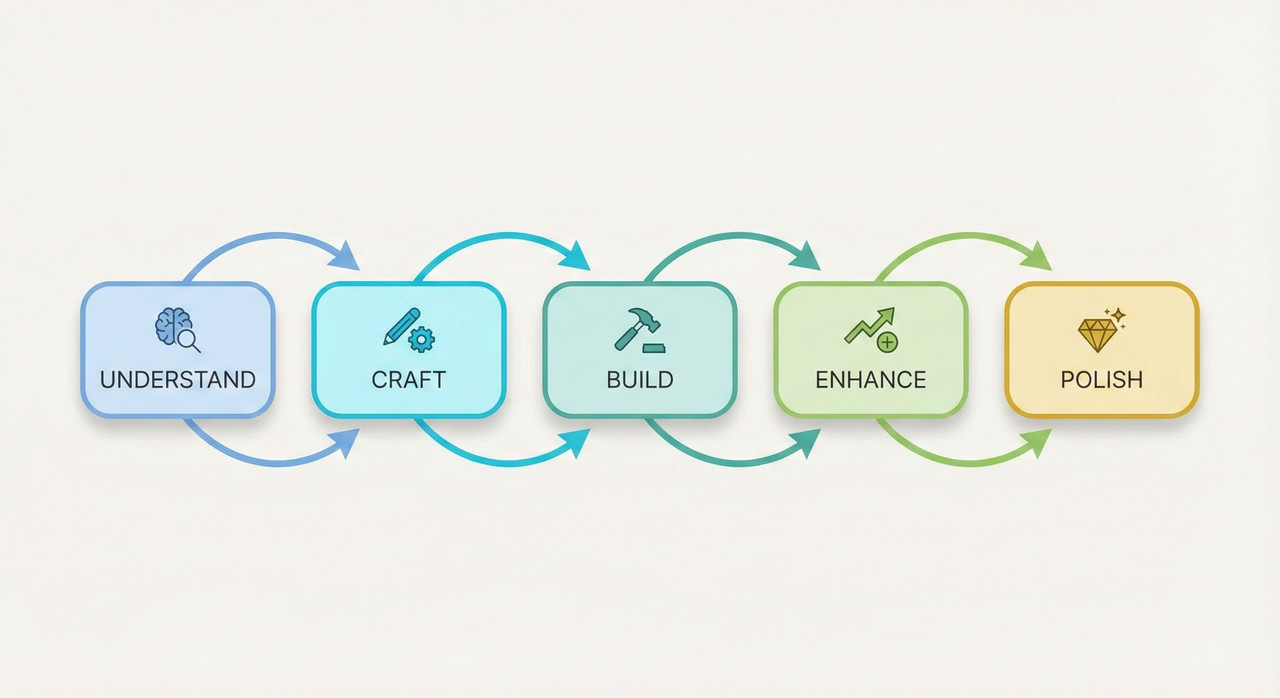
Target ReadersandContent Goal. - Structured “Chain of Thought”: The prompt breaks the writing process into 5 distinct logical steps (Understand -> Craft -> Build -> Enhance -> Polish). This mimics how a human editor works.
- The “Meta-Layer”: The request for a Strategy Application Map is brilliant. It forces the AI to “show its work,” allowing you to verify that it actually used storytelling (Strategy 3) or data (Strategy 4), rather than just assuming it did.
My Verdict: This is excellent for long-form blog posts, whitepapers, or pillar pages where authority is key.
Variations
Want to adapt this for different formats? Try these tweaks to the INPUTS section:
1. The LinkedIn Thought Leader Variant
Change Desired Length to “250 words” and Specific Tactics to Emphasize to “Strategy 2 (Hooks), Strategy 6 (Readability/Line breaks), and Strategy 5 (Multimedia/Carousel suggestions).”
Goal: Creates viral, scannable social posts rather than deep-dive articles.
2. The Product Launch Email Sequence
Change Content Goal to “Drive clicks to a landing page” and Core Theme to “Product X Launch.” Change Output Format to “A 3-part email sequence (Awareness, Consideration, Conversion).”
Goal: Adapts the high-value methodology for direct response copywriting.
Leave a Reply