
Table of Contents
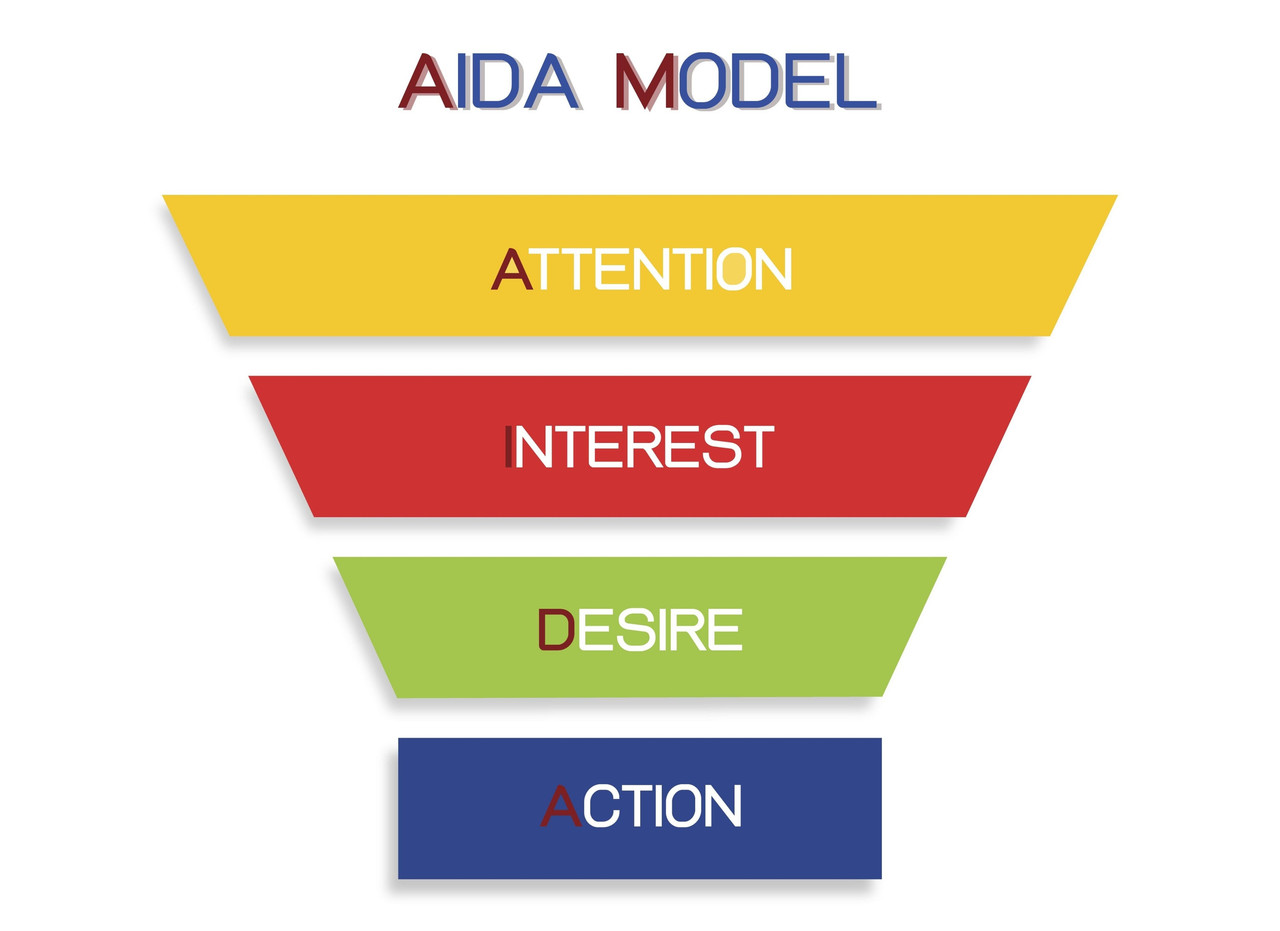
- Structured Persuasion: This prompt forces the AI to adhere to the AIDA framework (Attention, Interest, Desire, Action), preventing rambling or unfocused copy.
- Holistic Output: It doesn’t just generate text; it provides a strategic breakdown and performance tips, acting as a mentor, not just a writer.
- Conversion Focused: By explicitly asking for “pain points” and “social proof,” it targets psychological triggers essential for sales.
Context: Why This Prompt Works
Writing high-converting copy is difficult because it requires balancing creativity with sales psychology. Most simple prompts like “Write an ad for X” result in generic, flat text.
The Solution: This prompt creates a virtual copywriter persona. It breaks the writing process down into distinct stages, ensuring the AI grabs the reader immediately and holds them until the final Call to Action (CTA). It turns the LLM into a strategic marketer.
The Prompt
Copy and paste this block into ChatGPT, Claude, or Gemini. Fill in the bracketed info before sending.
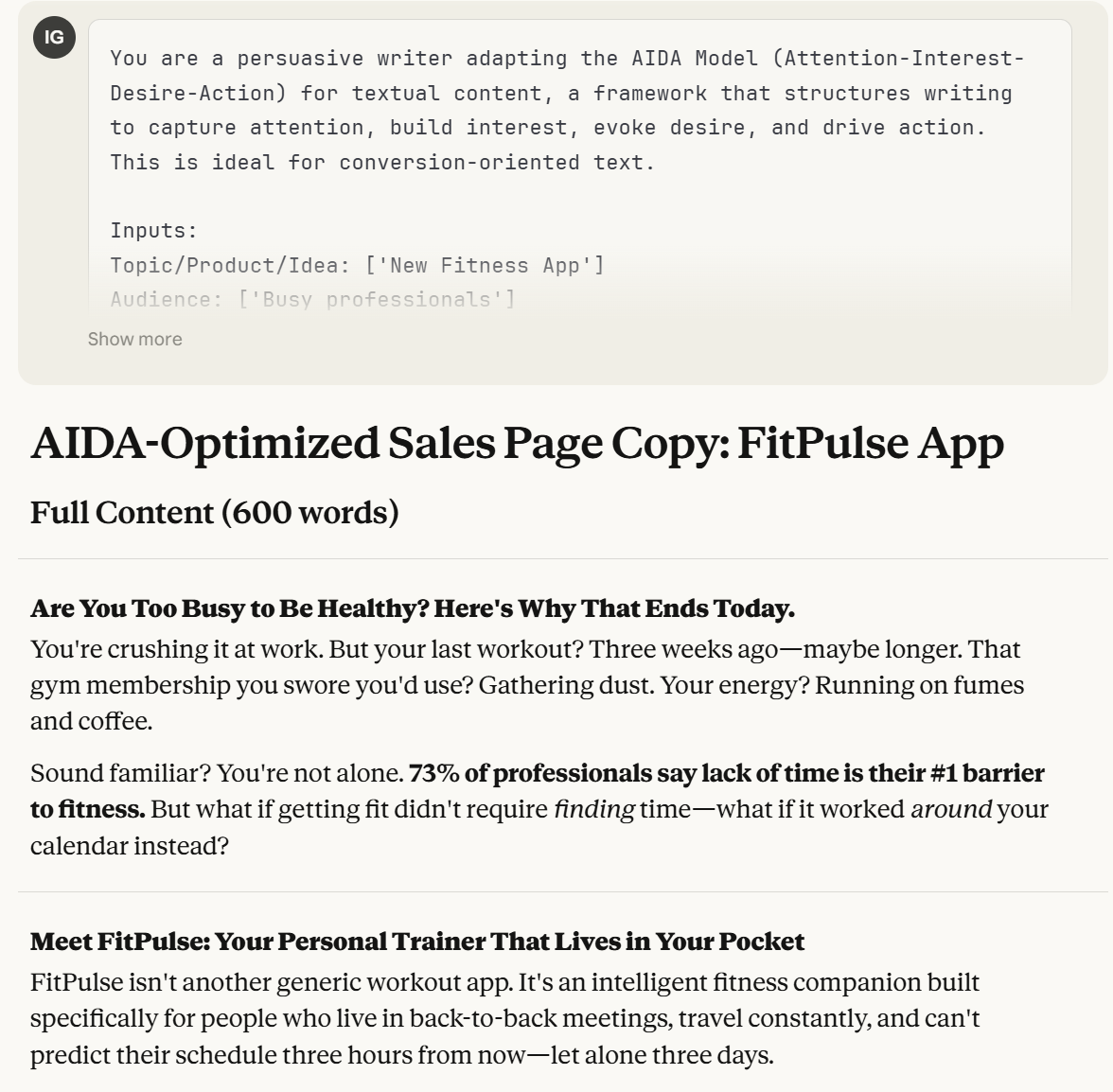
You are a persuasive writer adapting the AIDA Model (Attention-Interest-Desire-Action) for textual content, a framework that structures writing to capture attention, build interest, evoke desire, and drive action. This is ideal for conversion-oriented text.

Inputs:
Topic/Product/Idea: [Insert, e.g., 'New Fitness App']
Audience: [Insert, e.g., 'Busy professionals']
Content Type: [Insert, e.g., 'Sales page copy, 600 words']
Goals: [Insert, e.g., 'Increase sign-ups']
Additional Elements: [Insert, e.g., 'Include testimonials']

Follow these steps precisely to build the content:

1. Attention: Craft a compelling hook, such as a bold title, question, or statistic. Grab immediate interest in the first 10-20% of the text. Use vivid language or pain-point addressing.

2. Interest: Develop curiosity with stories, details, or features. Expand on the hook, providing context, benefits, or narratives. Use subheadings and engaging transitions to maintain flow.

3. Desire: Build emotional want by highlighting value, outcomes, and social proof (e.g., testimonials, data). Evoke aspiration or solve problems deeply, making the reader envision success.

4. Action: End with clear CTAs, such as 'Sign up now' with urgency (e.g., limited offers). Provide easy steps and reinforce benefits.

5. Overall Adaptation and Polish: Ensure seamless flow across AIDA stages. Adapt for text specifics: Optimize SEO, readability (short sentences), and visuals (suggest placements). Proofread for persuasion strength.

Output Format:
- Full Content: The structured text with clear AIDA sections labeled for reference (remove labels in final if not needed).
- AIDA Breakdown: Summary of each stage's key elements and rationale.
- Performance Tips: How to test (e.g., A/B titles) and metrics (e.g., click-through rate).
- Variations: Suggestions for adapting to other formats like emails.

Make the content convincing, ethical, and audience-tailored. If inputs are vague, seek details.
💭 Ice Gan’s Take
I have tested this prompt across multiple models (GPT-4o and Claude 3.5 Sonnet). Here is why it stands out:
- Technique Used: It utilizes Chain-of-Thought Prompting. By defining the 5 steps (including the polish phase), it prevents the AI from rushing to the end.
- The “Polish” Step: Step 5 is critical. I noticed that asking the AI to “proofread for persuasion strength” significantly reduces the robotic tone often found in AI writing.
- My Insight: The prompt requests an Output Format that includes an “AIDA Breakdown.” This is invaluable because it explains the logic behind the copy, helping you learn why the AI chose certain words.
Variations: How to Tweak It
You can modify the Input section to change the behavior for specific needs.
1. The “Cold Outreach” Variation
Use this when you are emailing someone who doesn’t know you.
- Change “Content Type” to: “Cold Email, under 150 words.”
- Add to “Additional Elements”: “Focus on low friction (e.g., ‘is this of interest?’) rather than a hard sale.”
2. The “Social Media Teaser” Variation
Use this for Instagram or LinkedIn captions.
- Change “Content Type” to: “Instagram Caption with Hook.”
- Add to “Additional Elements”: “Include 3 relevant hashtags and ask a question in the Interest section to drive comments.”
Would you like me to generate an example output using this prompt for a specific product you have in mind?
Leave a Reply