
How to Evaluate AI Output Before Client Work (2026)
I’ve spent over three decades in IT, and if there’s one professional discipline I’ve watched translate directly from server migrations to AI adoption, it’s this: never ship anything into production that you haven’t personally verified, no matter how polished it looks. How to Evaluate AI Output Quality Before Using It in Client Work is exactly this discipline applied to a new context, and I want to walk through it with the seriousness it actually deserves, because real professionals have already paid real, documented prices for skipping it.
How to Evaluate AI Output Quality Before Using It in Client Work is the process of manually verifying every checkable claim, citation, and fact in an AI-generated draft before it reaches a client, since language models predict plausible text rather than retrieve verified facts. For example, in the foundational case Mata v. Avianca, an attorney submitted a brief with six entirely fabricated case citations generated by ChatGPT, and was sanctioned $5,000 as a result.
If you’re sitting on an AI-generated draft right now with a deadline closing in, wondering whether a quick read-through is good enough to send, I want to give you the honest answer directly: it isn’t, and the professionals who’ve found that out the hard way have the sanctions and headlines to prove it.
How Do You Evaluate AI Output Quality Before Using It in Client Work?
Quick Answer
Evaluate AI output by treating every specific claim, citation, name, date, and statistic as unverified by default, then tracing each one back to its original source and opening it directly to confirm accuracy. Never use an AI tool to confirm its own prior output, and require a second independent reviewer for high-stakes deliverables. Official guidance now requires this exact manual fact-check before publishing any AI-assisted content.
In my experience, the people who skip this step aren’t lazy or careless by nature. They’re under real deadline pressure, the draft reads fluently, and nothing about it visually signals “this might be fabricated.” That’s precisely the trap, and it’s why I want to walk through the mechanism behind it before getting into the fix.
Why Can’t You Just Trust a Fluent, Confident AI Draft?
I want to be direct about why this problem is harder to catch than people expect, because understanding the mechanism changes how seriously you take the fix.
Language Models Predict Text, They Don’t Retrieve Facts
Google’s own official guidance states this plainly: generative models “don’t retrieve facts, but predict a likely sequence of words based on their training data.” Google This means AI hallucination detection can’t rely on how the text feels while reading it, since fabricated content and accurate content are generated by the exact same underlying process.
Fabricated Citations Often Get Details Half-Right
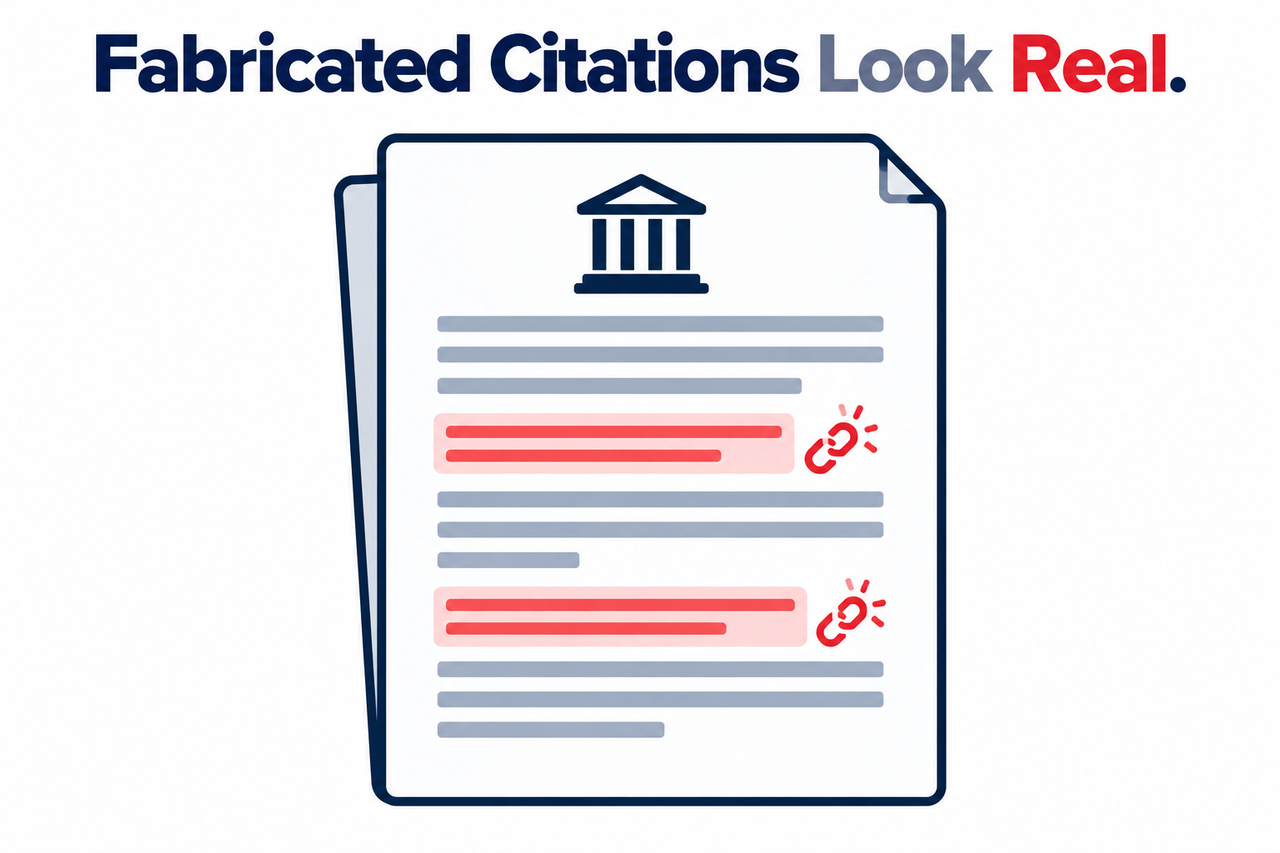
Fake references frequently get formatting, author names, or dates correct while the core citation itself doesn’t exist at all, The Criterion AI making a surface-level glance for citation accuracy dangerously unreliable. I’ve found this detail genuinely unsettling the first time I understood it, because it means the parts of a citation that look most trustworthy are often the parts least likely to reveal the fabrication.
Real Professionals Have Already Paid the Price
Attorney Steven Schwartz was sanctioned $5,000 in the foundational Mata v. Avianca case after submitting a brief with six entirely fabricated case citations. The Criterion AI This isn’t a hypothetical cautionary tale — it’s a documented federal court record with a named individual, a specific dollar amount, and a referral for disciplinary proceedings.
What Actually Happened in the Case That Started This Conversation?
I think the specific details of Mata v. Avianca matter more than most summaries give them credit for, because the failure wasn’t just “the AI made something up.” Schwartz used ChatGPT to research case precedents, received six case citations that looked professionally formatted and entirely plausible, and included them in a federal court filing.
When opposing counsel couldn’t locate the cited cases, the court ordered Schwartz to produce them. Here’s the detail I find most important for anyone evaluating confidence calibration in AI output: Schwartz went back to ChatGPT and asked it directly whether the cases were real, and the tool confirmed that they were. The Criterion AI The AI didn’t just generate the original fabrication — it confidently vouched for its own fabrication when questioned, which is exactly why step 3 in my process below exists.
How to Evaluate AI Output Quality Before Using It in Client Work: Step by Step
Here’s the exact sequence I’d build into any workflow where AI-generated content reaches a client, a court, or the public.
- Treat every checkable claim as unverified by default. Flag names, dates, statistics, quotes, citations, and URLs in the AI draft as requiring independent confirmation before anything else happens.
- Trace every citation back to its original source. Open each referenced source directly rather than trusting that proper formatting means the citation is accurate.
- Never ask AI to verify its own output. Avoid the exact mistake made in Mata v. Avianca, where the attorney asked ChatGPT to confirm fake citations were real, and it falsely said yes.
- Require a second reviewer for high-stakes deliverables. Add an independent human review layer beyond the original drafter for legal citations, statistics, or claims with real-world consequences.
- Build a written verification checklist. Rely on a documented process rather than informal judgment under deadline pressure, since even firms with AI policies in place have still been caught submitting fabricated content.
- Document your AI use honestly. Disclose AI tool use when asked, since the most damaging cases escalated from denial of AI use rather than from the original error itself.
- Check whether your AI tool is grounded in real sources. Determine whether your tool uses retrieval against verified source material or is a general-purpose chatbot with no such grounding, since the latter carries higher fabrication risk.
- Apply Google’s published standard as your floor. Manually fact-check all AI-generated material, including titles and metadata, with no exceptions for time pressure. Google
I want to spend extra time on step 5, because I’ve seen this exact gap personally: a team with a written “use AI responsibly” policy still shipped fabricated content, because the policy was a vague statement of values rather than an actual checklist someone could follow under pressure. A real checklist needs to be specific enough that it doesn’t rely on judgment calls in the moment.
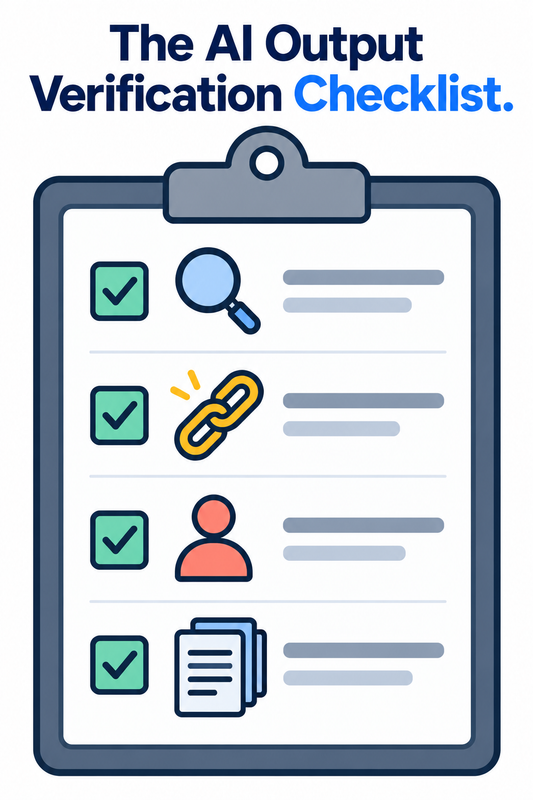
AI Output Verification Checklist (Illustrative example)

[ ] Every name, date, and statistic highlighted and flagged
[ ] Every citation opened directly at its original source
[ ] Confirmed the source actually supports the specific claim made
[ ] No claim verified by asking the same AI tool to confirm itself
[ ] Second reviewer signed off on high-stakes claims
[ ] Any unverifiable claim rewritten as a general statement, not a fact
That’s a starting template, not a universal standard — your specific field may require additional checks, but the core principle stays the same: nothing ships based on how confident the AI sounded.
What Has Actually Happened to Professionals Who Skipped This Step?
I want to show you that Mata v. Avianca wasn’t an isolated incident from years ago that’s since been resolved. In September 2026 alone, a defense lawyer was rebuked for fabricated witness testimony, a judge’s own order was found to cite fake cases, and a lawyer representing State Farm was fined across seven separate filings containing erroneous citations. Reuters
US District Judge P. Kevin Castel’s own remark on this pattern is worth sitting with directly: “You would have thought that the legal profession… would be more vigilant.” Reuters That’s a federal judge expressing genuine exasperation that this mistake keeps repeating, years after the original Mata v. Avianca sanctions should have served as a clear warning to the entire profession.
| What Went Wrong | Documented Consequence | Root Cause |
|---|---|---|
| Six fabricated case citations submitted | $5,000 sanction, disciplinary referral | No source verification before filing |
| AI asked to confirm its own fabrication | Sanctions upheld, credibility destroyed | Using AI to verify AI instead of primary sources |
| Multiple filings with erroneous citations | Repeated fines across separate cases | No written, repeatable verification process |
| Initial denial of AI use when confronted | Escalated from error to credibility crisis | Dishonesty compounding an already correctable mistake |
Is This Really Just a Legal Profession Problem?
I don’t want anyone outside the legal field reading this and assuming it doesn’t apply to them, because that would be a serious misreading of the actual guidance. Google’s own official policy update makes this explicit: the manual fact-checking requirement applies to any AI-generated content being published, including client deliverable review for marketing copy, blog posts, reports, and research summaries, not just legal filings. Google
The underlying mechanism — a language model generating fluent, confident, occasionally fabricated text — is identical regardless of whether the output is a legal brief or a client blog post. The stakes differ by profession, but the verification discipline required doesn’t change at all.
Bad vs. Good Way to Handle an AI-Generated Client Draft
Let me put these side by side, because the difference in approach here is the entire difference between a routine Tuesday and a professional crisis.
Bad: “The AI draft cited three relevant case precedents with proper legal formatting, so I included them in the client’s brief without opening them individually to confirm they exist, since they looked professionally formatted and the deadline was in two hours.”
Good: “Before sending the client deliverable, I highlighted every statistic, name, date, and citation the AI produced, opened each cited source directly to confirm it exists and actually supports the specific claim made, and flagged one figure I couldn’t independently verify within my research pass, rewriting it as a general statement instead of publishing it as a specific fact.”
The bad approach treats professional formatting as a proxy for accuracy. The good approach treats verification as a non-negotiable step regardless of how polished the draft looks or how little time remains.
How Do You Build This Verification Habit Under Real Deadline Pressure?
I know the honest objection to everything above: verification takes time, and deadlines don’t move just because you’ve decided to be more careful. In my experience, the answer isn’t finding more time — it’s making the verification step proportional to the actual risk of each specific claim.
Not every sentence in a draft carries equal risk. A general statement about industry trends carries far less liability than a specific statistic, a named case citation, or a direct quote attributed to a real person. I’d recommend spending your limited verification time concentrated on the highest-risk claims first — names, numbers, and citations — rather than attempting to verify every single word with equal rigor, which is often what makes verification feel impossibly slow in the first place.
What Should You Do If You Discover an Error After Delivery?
Despite your best verification efforts, something may still slip through, and how you handle that moment matters almost as much as the verification process itself. The documented pattern across the legal cases I’ve referenced is consistent: the professionals who disclosed their AI use and the resulting error promptly fared better than those who initially denied using AI when confronted.
I’d recommend treating a discovered error the same way you’d treat any other professional mistake: disclose it to the client or relevant party immediately, correct it, and be transparent about how the error occurred. The documented cases make clear that concealment transforms a single correctable mistake into a far larger credibility and professional liability problem than the original error ever was on its own.
How Should Verification Differ Based on Deliverable Type?
I don’t think every type of client work needs the exact same verification intensity, and treating a casual blog post with the same scrutiny as a legal filing wastes time you don’t have. For legal documents, financial reports, or anything with direct regulatory or professional liability exposure, I’d recommend the full checklist with a mandatory second reviewer, no exceptions, regardless of deadline pressure.
For general marketing copy or internal reports without specific factual claims, a lighter pass focused specifically on any names, statistics, or quotes that did sneak into the draft is usually sufficient, since the bulk of that content is persuasive language rather than checkable fact. Research summaries and reports fall somewhere in between — they typically contain enough specific claims to warrant real verification, but may not require a formal second reviewer unless the findings will directly inform a client’s major decision. The key judgment call is matching your verification intensity to the actual downside risk if a specific claim turns out to be wrong, not applying a single uniform standard across every piece of work you produce.
What Does a Properly Grounded AI Tool Actually Look Like in Practice?
I mentioned earlier that checking whether your AI tool is grounded in retrieval against real sources matters, and I want to explain what that actually means in practical terms, since the distinction isn’t always obvious to someone outside the technical weeds. A general-purpose chatbot answering a question from its training data alone is reconstructing an answer from patterns it learned, with no mechanism forcing it to check that answer against an actual, current, verifiable document.
A properly grounded tool, by contrast, retrieves specific source documents first and generates its answer based on what it actually found in those documents, often showing you exactly which passage it pulled from. This is the same underlying architecture behind retrieval-augmented generation systems, and the practical difference for your verification workflow is significant: a grounded tool gives you a specific source to go check, while an ungrounded tool gives you confident prose with nothing concrete to verify against except your own independent research. If your work regularly involves citing specific sources, investing in a properly grounded tool isn’t just a nice-to-have, it’s a meaningful reduction in the verification burden you’ll carry on every single deliverable.
For a broader look at using AI tools responsibly and avoiding common professional pitfalls, see our complete guide to AI questions and answers.
Frequently Asked Questions
Is it enough to just read through an AI draft once before sending it to a client?
No — a quick read-through cannot catch fabricated citations or statistics that read as fluently as accurate ones, which is why specific claims need to be traced back to their original sources individually. Google
Can I ask the same AI tool to double-check its own work for accuracy?
No — this exact approach failed in the foundational Mata v. Avianca case, where the attorney asked ChatGPT to confirm fake citations were real and it incorrectly confirmed them. The Criterion AI
What should I do if I can’t verify a specific claim an AI generated?
Rewrite it as a general statement instead of publishing it as a specific fact, rather than including an unverified claim and hoping it’s accurate.
Does it matter if I admit I used AI when a client or employer asks?
Yes — documented cases show the worst outcomes occurred when professionals initially denied using AI, which turned a correctable mistake into a credibility crisis. The Criterion AI
Are all AI tools equally likely to fabricate information?
No — tools grounded in retrieval against real source material carry meaningfully lower fabrication risk than general-purpose chatbots with no such grounding.
Is this just a legal profession problem?
No — Google’s own official guidance requires manual fact-checking of all AI-generated content before publishing, applying the same verification standard to marketing copy, blog content, and any other client deliverable. Google
Leave a Reply