
Transparency Note: This article may contain affiliate links, meaning we may earn a commission if you make a purchase through our links, at no extra cost to you.
Keeper AI Calculator: How “Delusional” Are Your Dating Standards, Really?
You keep hearing about the keeper ai calculator, but you are not sure if it is a joke, a serious dating tool, or something that is going to call you crazy for wanting a partner who is tall, financially stable, kind, and funny. In the world of viral TikTok trends and dating frustration, this tool has become the ultimate reality check.
[TOC]
Whether you know it as the “delusion calculator” or simply a standards test, the keeper ai calculator is designed to answer one question with cold, hard math: Does the person you are looking for actually exist?
In this guide, we will cover:
- Exactly what the Keeper AI calculator is and how it uses US Census data.
- How to read that infamous percentage result without shaming yourself.
- How to use the tool responsibly to calibrate your expectations.
- The critical difference between this dating tool and the tax calculators that share a similar name.
Expect a data-based reality check, not a verdict on your worth.
The Real Problem Behind “Keeper AI Calculator” Searches
People are not just looking for a new toy—they are trying to understand why dating feels so hard and whether their standards are secretly impossible.
Frustration with Modern Dating
If you are tired of endless swiping, ghosting, and the nagging feeling that “no one good is left,” you aren’t alone. Modern dating often feels like a second job with no paycheck. This exhaustion drives the curiosity behind the keeper ai calculator: users want to know if the problem is the apps, the dating pool, or their own specific expectations.
Social Pressure and “Delusional” Talk
Social media has popularized memes about “delusion” in dating, often mocking people for having laundry lists of requirements. This can take a toll. Being labeled picky or unrealistic hurts, especially when it comes from random internet comments rather than facts.
Why a Data‑Backed Check Feels Appealing
This is why a calculator based on population statistics feels more trustworthy than opinionated dating advice. The keeper ai calculator offers a way to turn vague anxiety into concrete information. It doesn’t argue with you; it just shows you the numbers.
What the Keeper AI Calculator Actually Is
It is a free “Standards Test” from Keeper, an AI matchmaking service, that tells you what percentage of the US population fits your stated partner criteria.
The Keeper AI Standards / “Delusion” Test
You might hear it called the standards calculator, delusion calculator, reality calculator, or the “build-a-man/woman” calculator. Regardless of the nickname, the function is the same: it processes your preferences and outputs one easy-to-read percentage.
Macro Data, Not Profiles
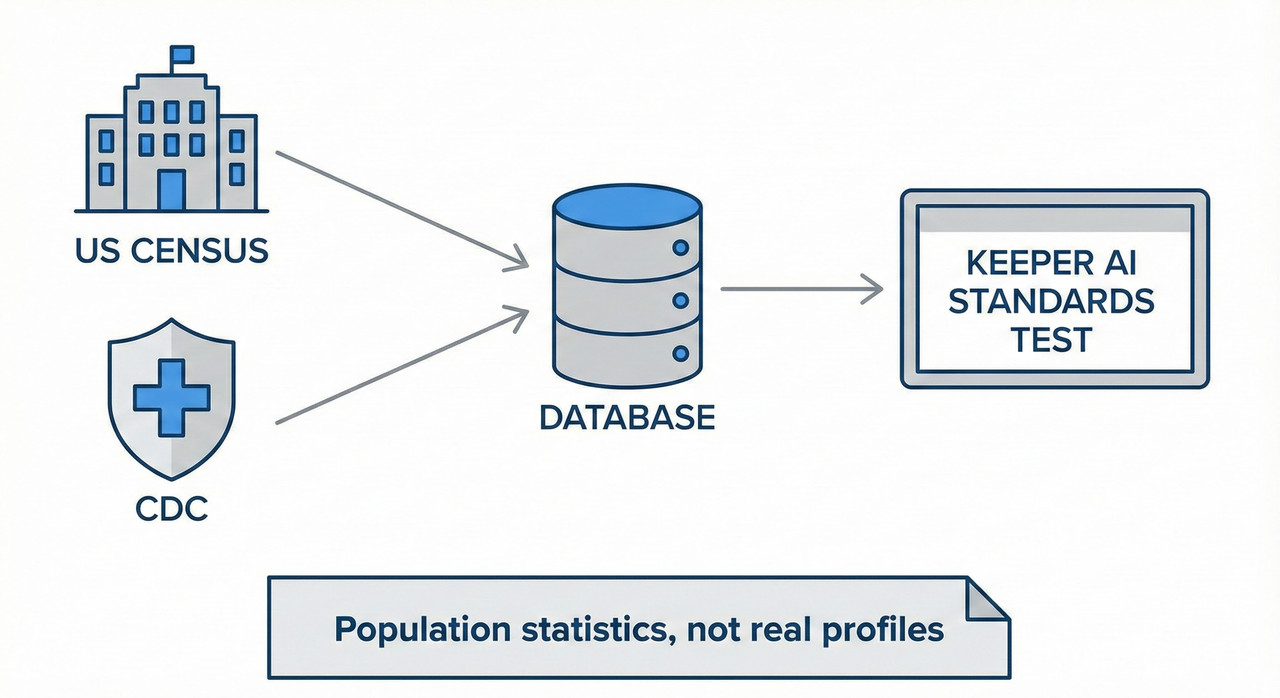
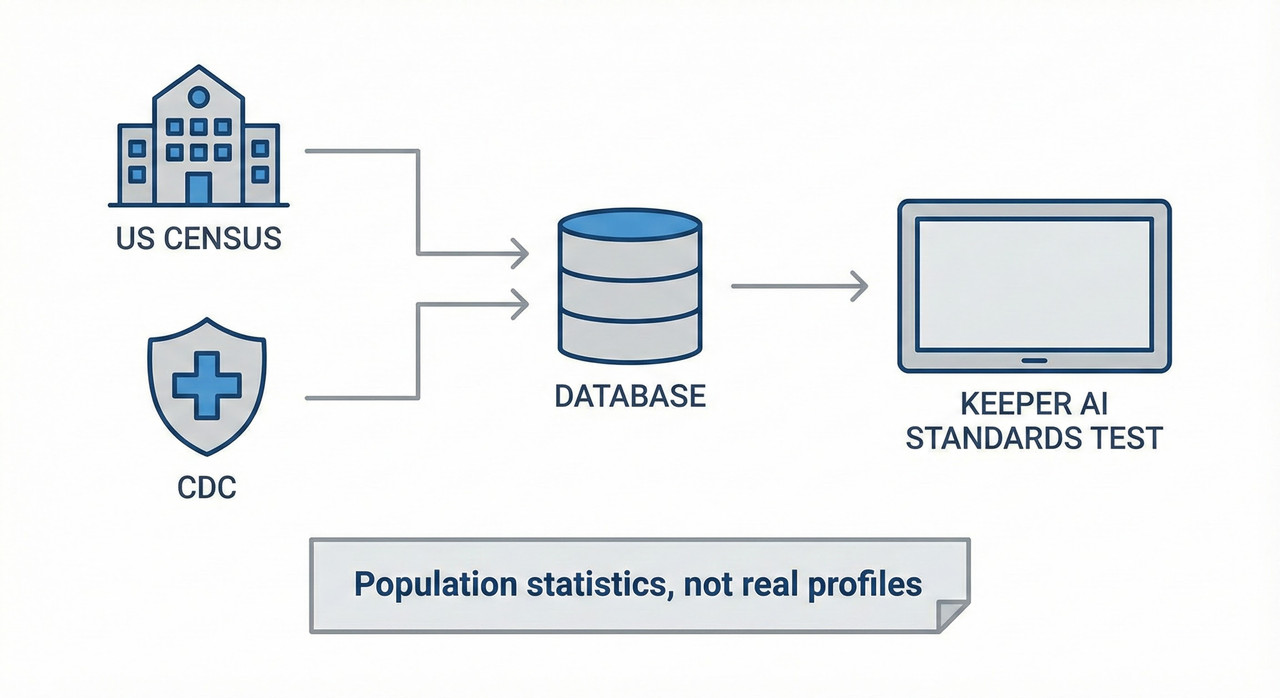
It is crucial to understand that the keeper ai calculator does not scan real dating profiles. It does not look at users on Tinder or Bumble. Instead, it uses US Census Bureau and CDC type data to estimate how many people match your filters. This is about overall statistical odds in the US population, not about finding specific people in your neighborhood.
Part of Keeper’s Bigger AI Matchmaker
Keeper is an AI matchmaker focused on long-term relationships and marriage. They use the free calculator as a “reality check” to bring people into their ecosystem. While the calculator is free, it serves as a lead-in to their paid matchmaking service, which involves more complex vetting.
How the Calculator Works (Inputs, Data, and Logic)
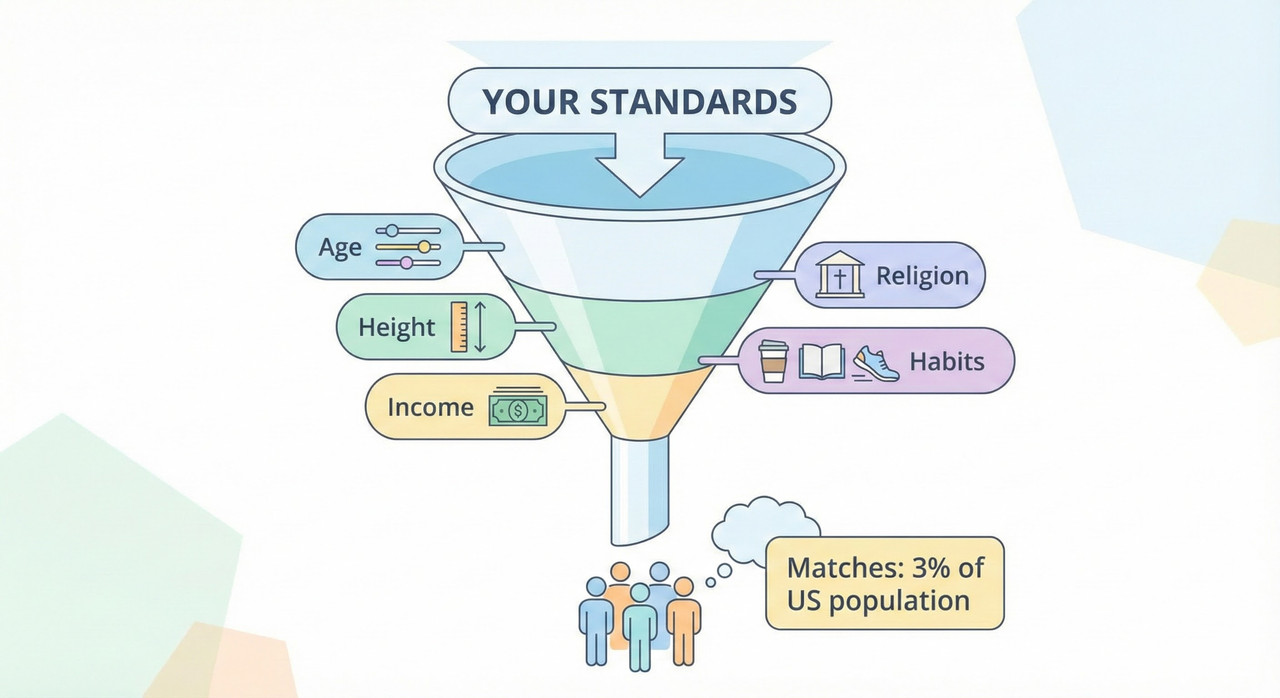
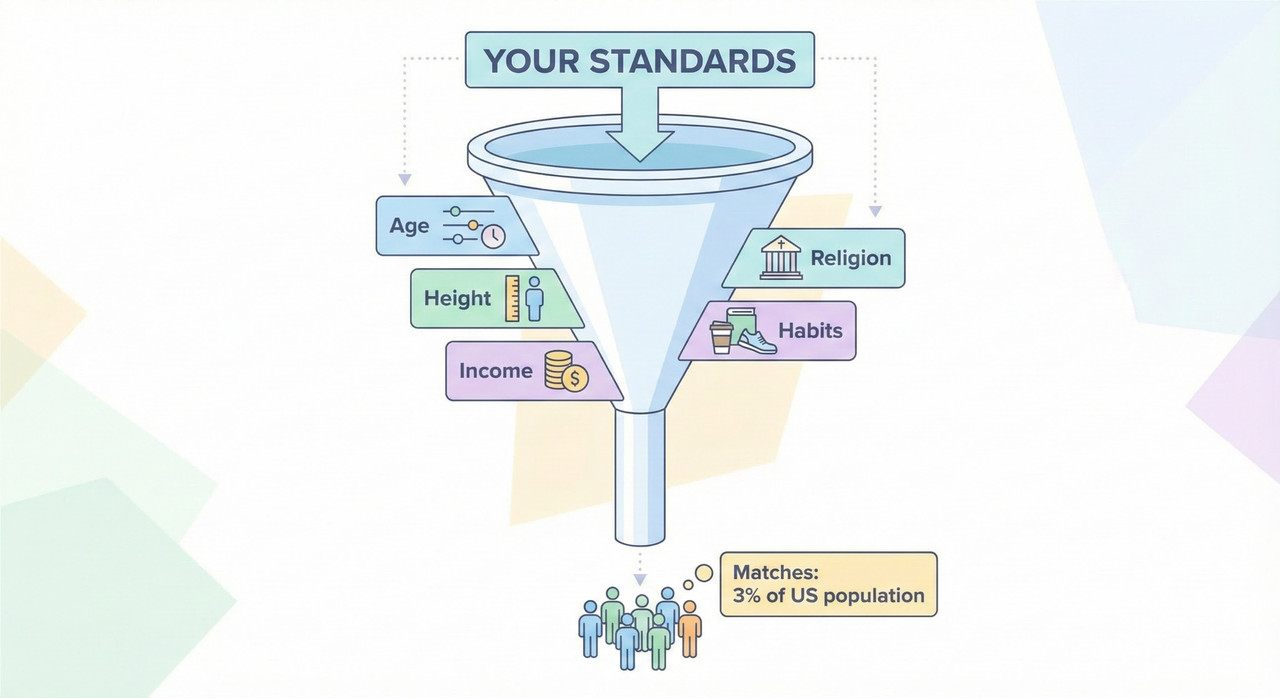
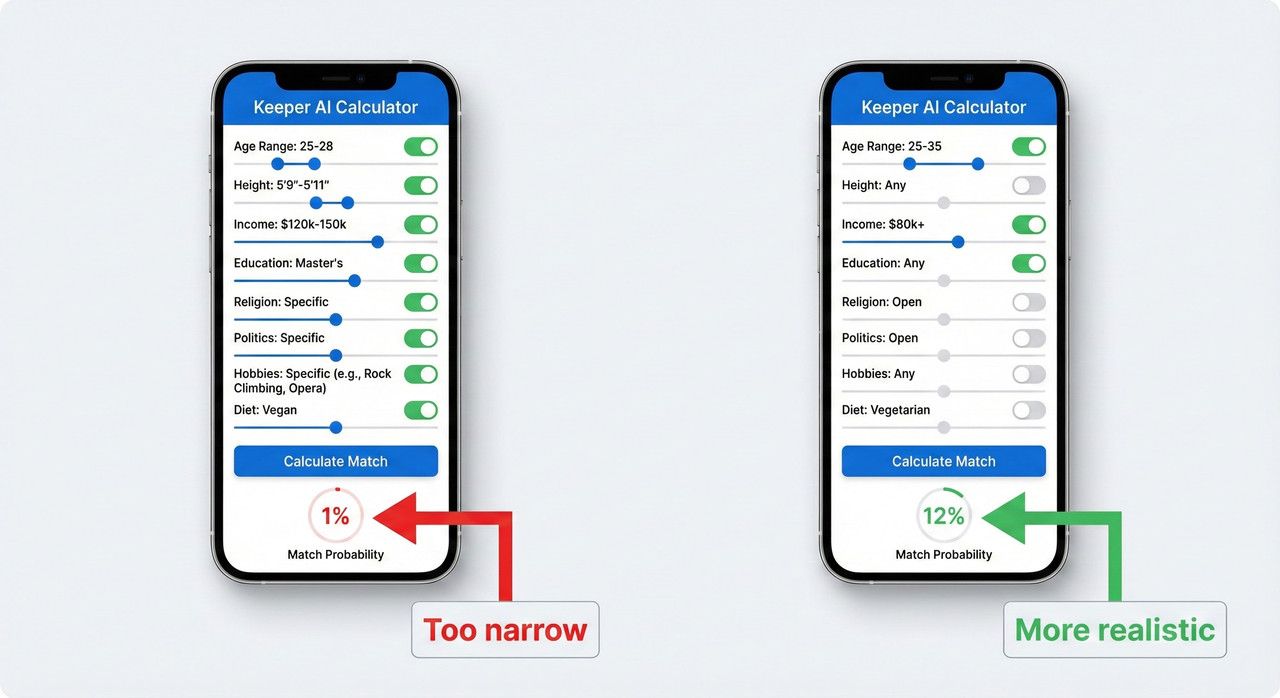
The calculator stacks your filters on top of one another and shows how each extra requirement shrinks the dating pool.
The Inputs You Can Control
To get your number, you will input specific criteria. The keeper ai calculator typically asks for:
- Gender: Who you are searching for (Men or Women).
- Demographics: Age range, height, ethnicity/race, religion, and education.
- Financials: Minimum income.
- Lifestyle: Smoking/drinking habits, desire for kids, political views, and interests.
The Population Math in Simple Terms
The math is straightforward: every filter you add acts as a sieve.
- If you want a man over 6 feet tall, you have eliminated roughly 85% of the male population instantly.
- If you add an income requirement of $100,000+, you narrow that group significantly further.
- Combining “tall + high income + narrow age range + specific religion” can quickly turn a pool of millions into a fraction of 1%.
The Final Percentage Result
After submitting your criteria, the keeper ai calculator displays a single percentage, such as “1.2% of American men fit your standards.” Remember: small numbers mean “rare in the population,” not necessarily “you are wrong to want this.” It just means your search will require more patience and effort.
Step‑by‑Step – How to Use the Keeper AI Calculator
A simple walkthrough helps you get a clear, honest result without confusion.
Step 1 – Open the Right Tool
Search for the official “Keeper Standards” page or “Keeper AI Standards Test.” Be careful not to click on “Keeper Tax” links by mistake (more on that below).
Step 2 – Set Your Search Gender and Basics
Select whether you are evaluating the pool of men or women. Enter the core demographics: your desired age range (e.g., 25–35), location (usually US-wide), minimum height, and minimum income.
Step 3 – Add or Skip Extra Filters
Decide if you want to filter by ethnicity, religion, education, or habits. This is where you need to be honest. Is a specific political view a dealbreaker? Is smoking a hard “no”?
- Note: Every extra filter narrows the result. Think carefully about what is truly non-negotiable versus what is just a preference.
Step 4 – Submit and Read Your Percentage
Click to calculate. The keeper ai calculator will crunch the census numbers and show you the percentage of the population that meets your description. Take a screenshot if you plan to discuss it with friends.
Step 5 – Play with “What If?” Scenarios
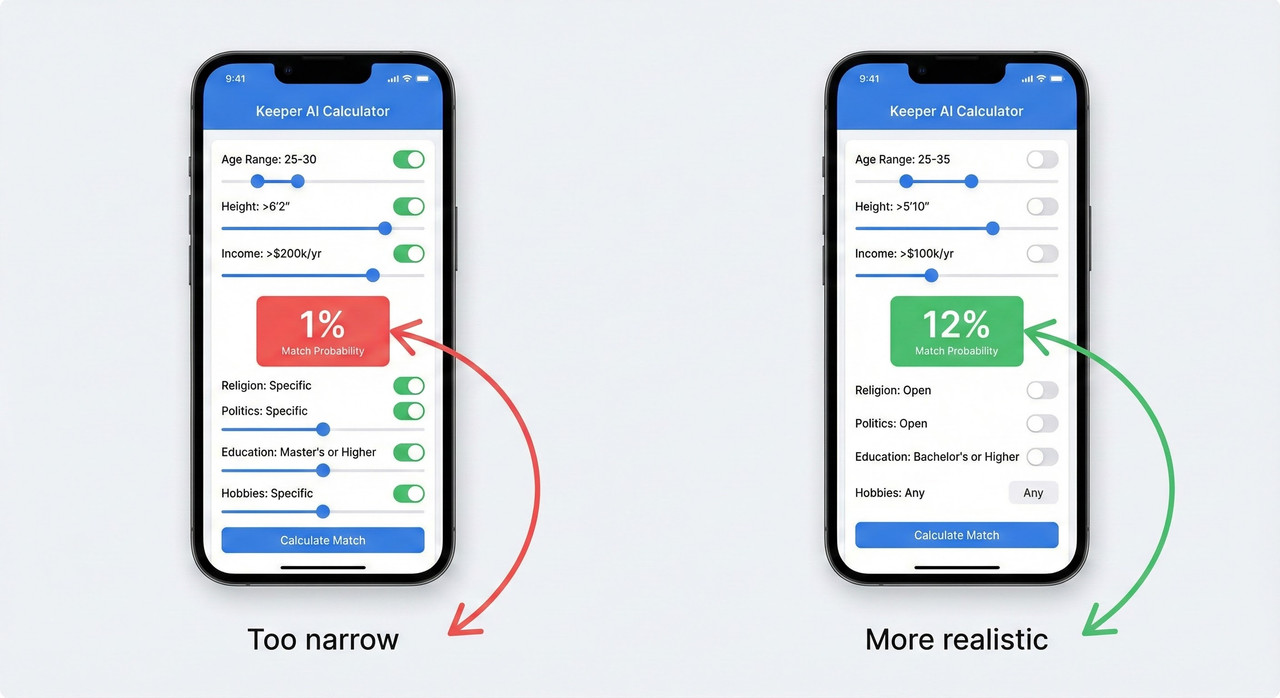
This is the most valuable part. Try loosening one filter. What happens if you lower the income requirement by $10k? What if you expand the age range by 3 years? Watch how the percentage jumps. This helps you find the balance between realism and high standards.
Making Sense of Your Result Without Shaming Yourself
The number is a tool for perspective, not a verdict on your worth or your standards.
What a Very Low Percentage Really Means
If you get a result like 0.8% or 2%, it means your ideal partner is statistically rare. It does not mean you are “delusional.” It implies that finding this person will be like finding a needle in a haystack. You may need to be more proactive, use targeted matchmaking, or accept that your search will take longer.
When High Standards Make Sense
Sometimes, a low percentage is acceptable. If your religion is a core part of your life, filtering for it is necessary, even if it shrinks the pool. Distinguish between “nice-to-haves” (like specific hobbies or hair color) and “must-haves” (values, life goals).
Using the Calculator as a Conversation Tool
Screenshots from the keeper ai calculator are excellent prompts for therapy or coaching. Showing a trusted friend your result can lead to conversations like, “I didn’t realize requiring a Master’s degree eliminated 87% of men—maybe I should reconsider that one.”
For Creators and Coaches – How to Use the Keeper AI Calculator in Content
The calculator is perfect for educational and entertaining content if you frame it responsibly.

Reaction Videos and Live Walkthroughs
The keeper ai calculator is viral gold for TikTok and YouTube. You can react to your own standards, take anonymous submissions from followers, or play “guess the percentage” games.
- Tip: Always respect privacy and anonymize submissions if you are reacting to other people’s standards.
Coaching and Workshop Use
Dating coaches can use this tool to anchor workshops in reality. It serves as a neutral third party. Instead of a coach telling a client they are being too picky, the data shows them. This opens the floor for exercises where clients adjust filters to see how they feel about a “15% pool” versus a “0.5% pool.”
Avoiding Misuse and Shaming
There is a risk of using this tool to ridicule people. As a creator, frame it as “odds education.” Avoid calling people delusional; instead, focus on the trade-offs between strict requirements and the probability of finding a match.
Limitations, Criticisms, and Common Misunderstandings
Knowing what the calculator cannot do prevents over‑reliance and misinterpretation.
It Is Based on US‑Level Data
The numbers reflect broad US statistics. If you live in New York City or Los Angeles, your local pool of high-earners might be much higher than the national average. Conversely, in rural areas, it might be lower. The keeper ai calculator generally does not account for these hyper-local nuances.
Limited Inclusivity and Relationship Types
Currently, Keeper’s ecosystem is focused largely on straight relationships and traditional marriage markers. The data points may feel less relevant for queer communities, polyamorous individuals, or those outside the US.
Not a Matchmaker, Just a Probability Tool
The calculator does not have a database of singles waiting to date you. It calculates probability. To actually meet people, you still have to go out, use apps, or hire a matchmaker (like Keeper’s paid service).
Important Note – Keeper AI vs. Keeper Tax Calculators
The “Keeper” brand also exists in the tax space, which confuses some users.
Completely Different Products
If you are looking for tax help, you are in the wrong place. Keeper Tax is a financial tool for freelancers to uncover tax write-offs. It has nothing to do with dating, height preferences, or marriage.
How to Make Sure You’re on the Right Site
- For Dating: Look for “Keeper Matchmaking,” “Standards Test,” or URLs containing “keeper.ai”.
- For Taxes: Look for “Keeper Tax,” references to 1099s, or write-offs.
Wrap‑Up – Using Keeper AI Calculator as a Healthy Reality Check
Used thoughtfully, the keeper ai calculator can ground your dating expectations in real numbers without forcing you to abandon your values.

A Quick Personal Checklist
- Be Honest: Input what you actually need, not just what you think sounds good.
- No Judgment: Treat the result as neutral data.
- Reflect: If your percentage is near zero, ask yourself which filter is the bottleneck and if it’s truly essential to your happiness.
Next Steps After Your Result
Once you have your number, journal about your reaction. Did it surprise you? Are you relieved? Consider talking to a coach or therapist about your non-negotiables. You can revisit the tool periodically as your life circumstances—and priorities—change.
Leave a Reply