
One AI Subscription or Several? Small Business Guide (2026)
I’ve spent over three decades in IT, and one thing I’ve learned watching businesses adopt every wave of new technology is this: the question is never really “one tool or many.” It’s “have you actually proven any of them work yet.” One AI Subscription or Several? Small Business Guide exists because I keep seeing owners treat this as a binary choice to make upfront, when it’s really a sequence of decisions that should happen one proven tool at a time.
One AI Subscription or Several? Small Business Guide addresses whether a small business should consolidate AI spending into a single platform or maintain multiple specialized tools, based on proven ROI rather than convenience. For example, a business should prove a $99/month writing tool saves measurable time before ever considering whether to replace it with a broader all-in-one platform.
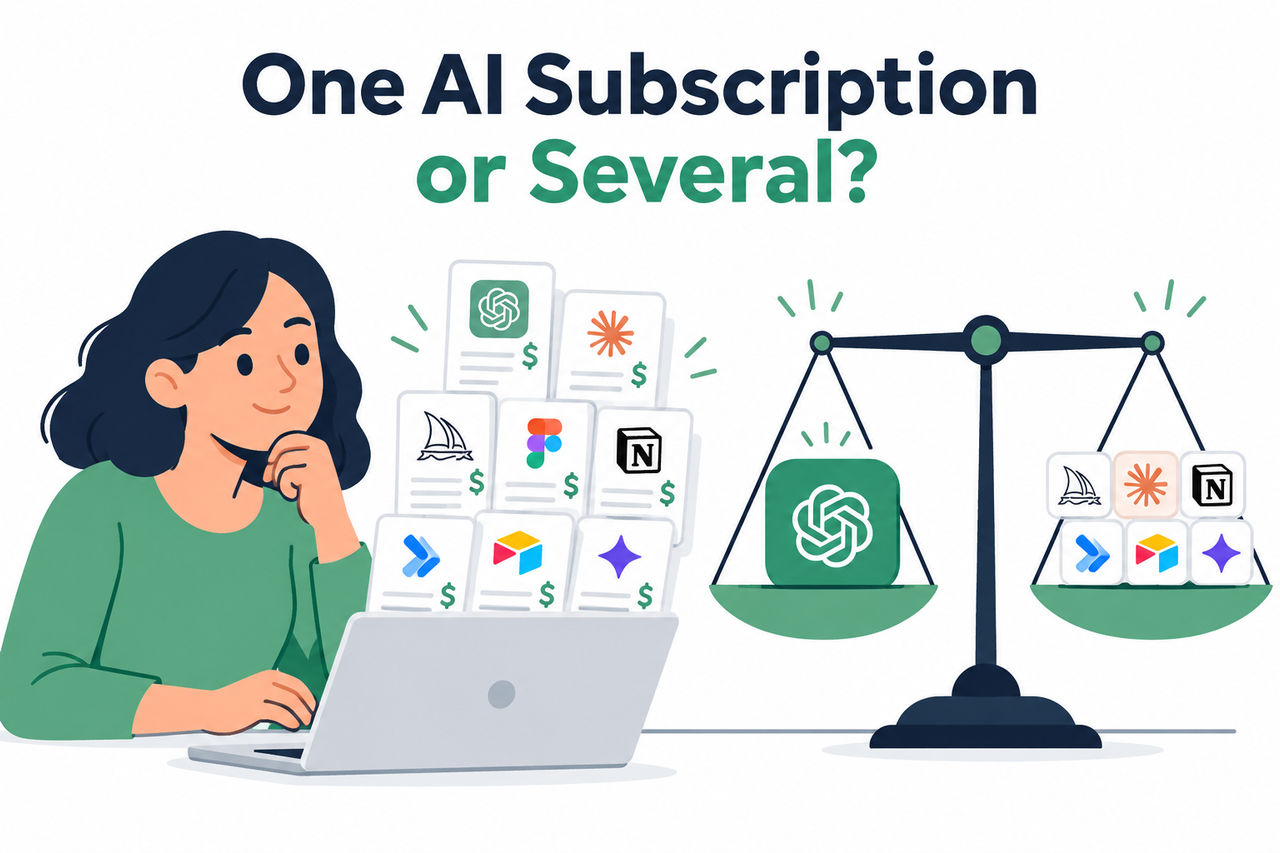
I want to be direct about something before we go further: neither extreme is safe. Scattering your budget across too many unproven tools wastes money on redundancy. Consolidating too early into one all-in-one platform can trade tools that were excellent at one thing for a single tool that’s merely adequate at everything.
Should a Small Business Use One AI Tool or Several?
Quick Answer
There’s no universally correct number of AI subscriptions — the right approach is starting with specialized tools that solve your biggest pain point, proving ROI calculator results on each one individually, and only considering tool consolidation once your team is comfortable with AI workflows. SUCCESS Magazine Consolidating too early risks replacing tools that excel at one thing with a single platform that’s merely adequate at everything.
In my experience advising small businesses on this exact decision, the mistake I see most isn’t picking the wrong number of tools. It’s skipping the proof step entirely and jumping straight to either “buy everything” or “buy one big platform” based on gut feeling rather than measured results.
Why Does AI Subscription Spending Get Out of Control So Easily?
Before deciding how many tools to run, it’s worth understanding exactly why AI spending tends to spiral without anyone noticing until the bill arrives.
The Subscription Price Was Never the Real Cost
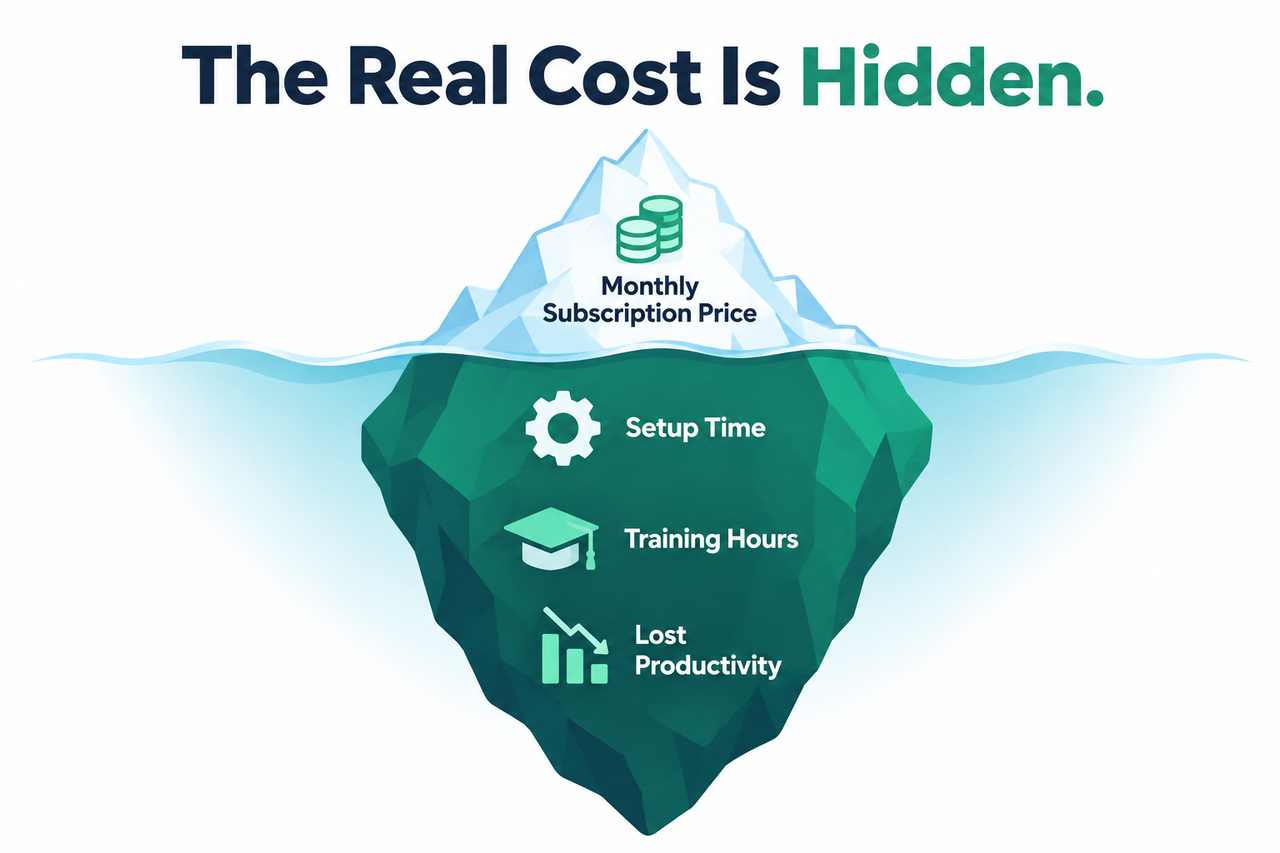
A $99/month tool typically becomes a $2,500 first-year investment once setup time, training hours, and workflow disruption are counted. SUCCESS Magazine I’ve watched business owners budget purely around the advertised monthly price and then get genuinely surprised months later by how much time their team actually spent getting the tool to work properly.
Most Owners Are Undercounting Their Actual AI Tools
The average company now pays for 4.5 AI-related tools, and this figure frequently balloons once AI tool sprawl from features embedded in existing software are counted. Cledara If you’re only tracking your standalone ChatGPT or Claude subscription, you’re very likely missing AI capabilities you’re already paying for inside tools like Notion, Canva, or your CRM.
Departments Often Use Far More Tools Than They Report
Three departments who estimated using five AI tools were actually found to be using seventeen once shadow AI and embedded features were counted. Cledara That gap between what people think they’re using and what they’re actually paying for is the single biggest source of AI spend most small businesses never see coming.
I’ve found that once an owner actually runs this AI audit for the first time, the number is almost always higher than they expected, sometimes by a wide margin. That surprise alone tends to be the moment people start taking a structured approach to this decision seriously.
How Do You Decide Between One AI Subscription and Several?
Here’s the exact sequence I walk business owners through, based directly on measured frameworks rather than guesswork or gut feeling.
- Audit every AI tool across three layers. Track standalone subscriptions, AI features embedded in software you already pay for, and any usage-based API costs, since most owners only track the first layer. Cledara
- Calculate the true first-year cost of each tool. Use monthly subscription times twelve, plus setup hours, training hours, and lost productivity value, not just the sticker subscription price. SUCCESS Magazine
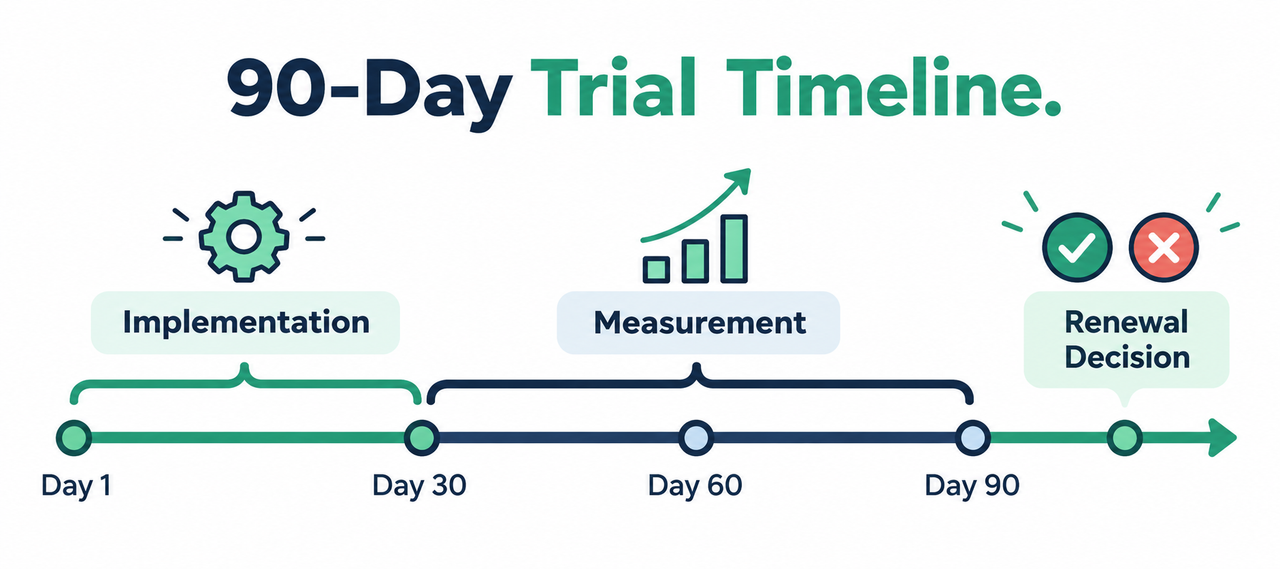
- Run a 90-day trial before any renewal decision. Allow 30 days to implement properly and 60 days to measure consistent results before deciding whether a tool earns its place. SUCCESS Magazine
- Set one measurable metric per tool before renewal. If you can’t quantify hours saved or revenue generated by day 90, don’t renew the subscription.
- Watch for the five red flags of AI waste. Unconfigured features, workarounds instead of adoption, unquantifiable savings, constant human review, and competitor-driven purchases all signal a tool isn’t earning its cost. SUCCESS Magazine
- Don’t consolidate before proving individual ROI. Solve one problem exceptionally well with a specialized tool before considering whether an all-in-one platform can replace it.
- Look for cross-department redundancy once tools are proven. Only after individual tools are validated, actively check whether different teams are quietly paying for overlapping redundant capabilities. Cledara
- Check whether existing software price increases are AI-driven. Vendors like Notion, Canva, and Salesforce have raised prices citing AI features, meaning AI spend can grow without a single new subscription appearing. Cledara
I want to flag step 2 specifically, because in my experience it’s the calculation almost nobody does before signing up, and it’s the single most eye-opening step in this entire process once someone actually runs the numbers on a tool they’re considering.
What Do the Real AI Spending Statistics Actually Show?
I always prefer grounding a recommendation like this in real numbers rather than general impressions, and the data here is more specific than most people expect. Verified statistics show AI tool sprawl is both common and larger than owners realize, with average AI tool counts and hidden shadow AI usage consistently exceeding what businesses initially report. Cledara
| Cost Component | What It Actually Covers | Why Owners Miss It |
|---|---|---|
| Monthly subscription | The advertised sticker price | This is the only number most budgets account for |
| Setup hours | Time spent configuring the tool correctly | Rarely tracked as a real cost against the tool |
| Training hours | Time spent teaching the team to use it | Often absorbed into “normal” work time, unmeasured |
| Lost productivity | Workflow disruption during the transition period | Invisible until measured directly against output |
Seeing the true first-year cost broken into these four components is usually what convinces an owner that the advertised price was never the real number they should have been budgeting around in the first place.
Why Does the True First-Year Cost Matter More Than the Subscription Price?
This distinction changes the entire decision in practice, not just on paper. If you’re comparing a $99/month specialized tool against a $200/month all-in-one platform purely on subscription price, the specialized tool looks like the obvious budget-friendly choice. Once you account for the fact that you’re paying setup and training costs on every additional tool you add, the math shifts considerably.
Three specialized tools at $99 each don’t just cost $297 monthly — they cost three separate rounds of setup time, three separate learning curves for your team, and three separate points of workflow disruption. A single platform that covers the same three needs adequately, even at a higher subscription price, can sometimes come out ahead once you account for the hidden costs multiplying across every additional tool in your stack.
How Do You Know When You’ve Actually Proven a Tool’s ROI?
Proving ROI isn’t a feeling — it’s a specific, measurable outcome you defined before you started the trial. I’ve found that businesses who skip defining that metric upfront almost always end up in a vague, unresolvable debate about whether a tool “feels” worth keeping, which tends to default toward keeping tools nobody can justify simply because nobody wants to be the one who cancels something.
Before you even start a 90-day trial, write down the single number that will decide the outcome: hours saved per week on a specific task, or a dollar figure in revenue or cost avoidance the tool needs to demonstrate. If day 90 arrives and you can’t point to that number with confidence, the honest answer is that the tool hasn’t proven itself, regardless of how useful it feels in the moment.
What Should You Do Once Individual Tools Are Actually Proven?
Once you’ve validated a specialized tool against its defined metric and your team is genuinely comfortable using it, that’s the point where tool consolidation becomes worth evaluating rather than something to jump to by default. I’d treat this as a deliberate second phase, not a natural next step that happens automatically.
At this stage, the question changes from “does this tool work” to “would replacing several proven tools with one broader platform actually preserve the value each individual tool was delivering.” Sometimes the answer is yes, especially if the specialized tools were solving overlapping problems. Sometimes the answer is no, because an all-in-one platform genuinely can’t match a specialized tool’s depth on the specific task that tool excels at.
Bad vs. Good Way to Decide on AI Subscriptions
Let’s put these side by side, because the difference in approach determines whether your AI spend actually delivers value or just accumulates.
Bad: “I’ll just sign up for three or four different AI tools because they each look useful, and figure out later which ones are actually worth the money.”
Good: “I calculated the true first-year cost of the $99/month writing tool I was considering — it came to roughly $1,900 once setup and training hours were included — set a 90-day trial with one specific metric (hours saved on weekly content drafts), and only renewed after confirming it actually hit that target.”
The bad version treats AI adoption as low-stakes experimentation with no real cost. The good version treats it as a genuine business decision with a defined evaluation process and a clear point where the decision actually gets made.
How Do You Avoid Overcorrecting Into Under-Investment?
It’s worth flagging the opposite failure mode too, since I’ve seen owners overcorrect after reading about subscription fatigue and become so cautious that they never actually adopt anything, missing out on genuinely valuable tools out of fear of repeating the sprawl mistake. Being disciplined about proving ROI doesn’t mean avoiding new tools entirely — it means giving each one a fair, structured trial rather than either impulse-buying everything or refusing to try anything new.
The goal of this entire framework isn’t fewer tools for their own sake. It’s tools that have actually earned their place through measured results, whether that ends up being one platform or four specialized ones. A business running three AI tools that each clearly pay for themselves is in a far better position than a business running one expensive platform nobody can point to concrete results from.
What Does This Look Like for a Solo Operator Versus a 10-Person Team?
The right pace for this decision shifts meaningfully depending on whether you’re evaluating AI tools alone or coordinating a small team’s adoption. As a solo operator, you have the freedom to run every step of this framework quickly, since there’s no coordination overhead and you’re the only person whose time and workflow disruption you need to account for in the cost calculation.
For a small team of ten or so people, the same framework applies, but the training hours and lost productivity components of the true first-year cost calculation grow substantially. Training five people to use a new tool effectively costs meaningfully more in aggregate hours than training yourself alone, and workflow disruption during a rollout tends to compound when multiple people are adjusting their habits simultaneously rather than one person absorbing the entire learning curve independently. I’d recommend running any new tool trial with a smaller pilot group first — two or three team members rather than the whole team — before rolling it out further, so you’re measuring real results against a manageable cost rather than absorbing the full training and disruption cost across everyone at once before you’ve confirmed the tool is worth keeping.
How Should You Handle a Tool That Partially Proves Its ROI?
Not every trial produces a clean yes-or-no result. Sometimes a tool hits its defined metric for some tasks but falls short for others, and I’ve found this ambiguous middle ground trips people up more than a clear success or failure would.
In my experience, the right response isn’t to average out a mixed result into a vague “it’s probably fine” renewal decision. Instead, look specifically at which use case actually delivered the measured value and which one didn’t, then ask whether the tool is worth keeping for the narrower use case alone, at its actual cost, rather than treating the original broad expectation as the only valid outcome. A tool that saves real time on one specific task, even if it disappointed on the others you initially hoped it would help with, can still be a legitimate keep — as long as you’re renewing it for what it actually proved, not what you originally hoped it would do.
What’s the Single Biggest Mistake to Avoid in This Entire Process?
If there’s one thing I’d want a small business owner to take away from this framework above everything else, it’s this: the biggest mistake isn’t picking one tool when you should have picked several, or vice versa. It’s making that choice before you’ve defined what success actually looks like for even a single tool.
Every step in this guide depends on having a measurable target before you start spending. Without that, every renewal decision becomes a guess dressed up as a business decision, and every consolidation conversation becomes a debate about feelings rather than results. Fix that one habit first, and the rest of this framework becomes far easier to apply consistently, whether you end up running one AI subscription or five.
For a broader look at evaluating AI tools and answering common questions about AI adoption beyond this specific subscription decision, see our complete guide to AI questions and answers.
Frequently Asked Questions
Should a small business consolidate into one AI platform or keep several specialized tools?
Neither is universally correct — start with specialized tools that solve your biggest pain point, prove ROI on each individually, and only consider consolidation once your team is comfortable with AI workflows. SUCCESS Magazine
What’s the real cost of an AI subscription beyond the monthly price?
A $99/month tool typically becomes roughly a $2,500 first-year investment once setup time, training hours, and workflow disruption are factored in, meaning the advertised price represents only a fraction of the true cost. SUCCESS Magazine
How long should a small business trial an AI tool before deciding to keep it?
A minimum of 90 days — roughly 30 days to implement properly and 60 days to measure consistent, quantifiable results. SUCCESS Magazine
How can a small business tell if it already has more AI tools than it realizes?
Audit across three layers — standalone subscriptions, AI features embedded in existing software, and usage-based API costs — since most owners only track standalone subscriptions and miss the other two entirely. Cledara
What are the warning signs that an AI subscription isn’t worth renewing?
Unconfigured features, teams working around the tool rather than with it, inability to quantify savings, needing constant human review that erases automation benefits, and having purchased it purely because a competitor uses it. SUCCESS Magazine
Is it risky to consolidate too many AI tools into one all-in-one platform?
Yes — consolidating before proving individual tool ROI risks replacing tools that excel at specific tasks with a single platform that’s merely adequate across the board, potentially leaving the business worse off.
Is it possible to spend too little on AI tools out of excessive caution?
Yes — overcorrecting into refusing to try new tools out of fear of repeating sprawl mistakes can mean missing out on genuinely valuable tools, so the goal should be structured trials rather than either extreme.
Leave a Reply